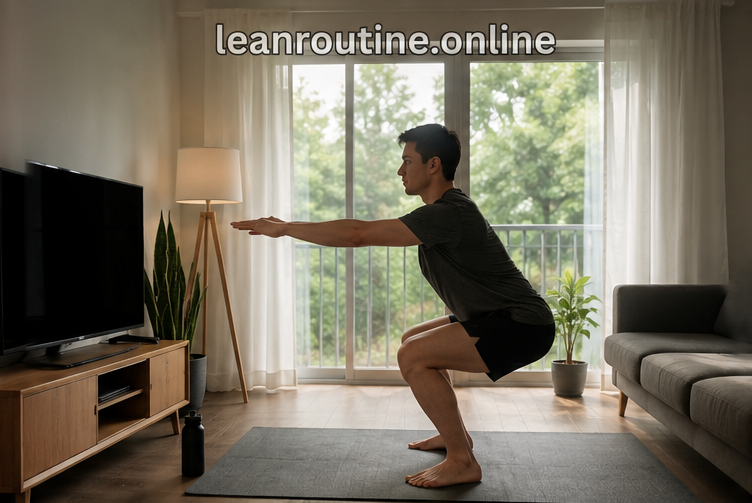
leanroutine.online – A practical full-body home workout plan designed for busy professionals to stay fit, build strength, and save time without needing a gym.
It usually starts the same way. You plan to work out after work, but a late meeting runs over, emails pile up, and suddenly it’s 9 PM. The gym feels out of reach, and skipping just for today turns into a pattern.
That’s exactly where a full-body home workout becomes more than just convenient. It becomes sustainable. When time is limited, efficiency matters more than intensity alone. The right structure can help you stay consistent without rearranging your entire day.
This guide breaks down a realistic approach built specifically for busy professionals who need results without complexity.
Why Full-Body Workouts Work Better for Tight Schedules

A common mistake is trying to follow gym-style split routines at home. Chest day, leg day, back day. It sounds structured, but it assumes you can train 4-6 times per week.
For most professionals, that’s not realistic.
A full-body home workout solves this by targeting all major muscle groups in a single session. You train less frequently but more effectively. Missing one session doesn’t derail your entire week.
There’s also a metabolic advantage. Full-body sessions tend to elevate heart rate more consistently, which supports calorie burn and overall conditioning. This is especially useful if your goal includes fat loss or improving energy levels throughout the day.
If you’re balancing work deadlines and personal responsibilities, efficiency beats perfection. That’s why many people shift toward a practical home workout strategy for weight loss once they realize time is their biggest constraint.
Structuring a 30-Minute Full-Body Home Workout

The biggest barrier isn’t motivation. It’s uncertainty. People often waste time deciding what to do, which leads to skipping the workout altogether.
A structured 30-minute session removes that friction.
Start with a simple framework:
5 minutes: warm-up
20 minutes: main workout
5 minutes: cooldown or mobility
The warm-up should prepare your joints and increase heart rate gradually. Think arm circles, bodyweight squats, light lunges, and dynamic stretching.
The main workout should include compound movements. These are exercises that work multiple muscle groups at once. They give you more return per minute.
For example, a basic session might include:
Squats for lower body
Push-ups for upper body pushing strength
Rows or pull variations for upper body pulling
Core work like planks or leg raises
The key is sequencing. Alternate between upper and lower body movements to reduce fatigue and maintain intensity without needing long rest periods.
The cooldown often gets skipped, but it helps reduce stiffness and improves recovery. Even a few minutes of stretching can make the next session feel easier.
Choosing the Right Exercises for Maximum Efficiency
Not all exercises are equal when time is limited. Isolation movements may feel satisfying, but they don’t deliver the same efficiency as compound exercises.
Focus on movements that mirror real-life actions.
Squats replicate sitting and standing.
Push-ups mimic pushing movements.
Rows reflect pulling tasks.
Core exercises support posture and stability.
For beginners, simplicity matters more than variety. Many people get distracted by trying advanced movements too soon. This often leads to poor form and frustration.
If you’re starting from scratch, following a simple bodyweight routine for beginners can help you build a strong foundation without overcomplicating things.
Another common mistake is underestimating progression. Doing the same routine with the same intensity won’t produce long-term results. You need to gradually increase difficulty.
That can mean:
Adding repetitions
Slowing down tempo
Reducing rest time
Introducing more challenging variations
The goal is not to make workouts longer. It’s to make them slightly harder over time.
How to Stay Consistent When Work Gets Busy
Consistency isn’t about discipline alone. It’s about reducing decision fatigue.
Busy professionals often fail not because they lack motivation, but because their routines require too much thinking.
A fixed schedule helps. Instead of deciding daily, assign specific workout days. For example, Monday, Wednesday, and Friday mornings or evenings.
Time of day matters less than predictability. Choose a slot that you can realistically protect.
Another effective strategy is lowering the barrier to entry. You don’t need a perfect setup. A small space in your living room is enough. No commute, no preparation time.
Some days will still feel overwhelming. On those days, shorten the workout instead of skipping it entirely. A 15-minute session maintains momentum better than doing nothing.
It also helps to think in terms of weekly consistency rather than daily perfection. That’s where understanding how to organize your weekly training schedule becomes useful. Even a simple plan can prevent gaps that lead to losing progress.
Common Mistakes That Slow Down Progress
One of the biggest misconceptions is that more intensity always equals better results. People push too hard in the first week, then burn out.
Sustainable progress comes from consistency, not extremes.
Another issue is poor exercise selection. Some people rely heavily on random online workouts without structure. This leads to imbalanced training. For example, too many core exercises and not enough lower body work.
Form is another overlooked factor. At home, there’s no trainer watching you. It’s easy to rush through movements. Over time, this reduces effectiveness and increases the risk of discomfort or injury.
Tracking progress is also often ignored. Without tracking, it’s hard to know if you’re improving. Even simple notes like reps completed or perceived difficulty can provide useful feedback.
Lastly, many people underestimate recovery. Sleep, hydration, and nutrition all influence performance. A well-designed full-body home workout won’t compensate for chronic fatigue or poor habits.
When a Full-Body Home Workout Isn’t Enough
While a full-body home workout is highly effective, it’s not always the perfect solution for every stage.
If your goal shifts toward advanced muscle building, you may eventually need more volume per muscle group. This is where split routines or added resistance become more relevant.
Similarly, if you plateau despite consistent effort, it might indicate that your current routine lacks progression or intensity. This doesn’t mean home workouts stop working. It means the structure needs to evolve.
There are also cases where time isn’t the only constraint. Mental fatigue plays a role. After a long workday, even a short workout can feel demanding. In those situations, reducing intensity while maintaining habit consistency is often the better choice.
The key is adaptability. A full-body approach works best when it aligns with your current lifestyle, not when it tries to imitate a gym-based routine.
A full-body home workout doesn’t require perfect conditions. It works because it fits into imperfect days.
When time is limited, the goal isn’t to do everything. It’s to do enough, consistently, and with intention.