You usually start with good intentions.
A workout video gets saved. Shoes are ready near the door. You tell yourself this time it will finally become a habit. Then work gets messy, your energy drops, and three days later the routine quietly disappears.
That is often the real problem when trying to start home workout routine with a busy schedule. It is rarely about motivation. Most people fail because they build workouts around ideal days, not real ones.
If your calendar already feels packed, the goal is not to create a perfect fitness plan. It is to make movement fit into life without turning every workout into another task that feels heavy.
Stop Building a Routine Around Free Time That Rarely Exists

A common mistake is waiting for extra time.
That sounds logical. If you get a free hour, you can finally work out. But for busy people, extra time often never shows up. Meetings run late. Kids need attention. Emails somehow multiply at night.
A better way to start home workout routine is to anchor it to existing behavior.
For example:
- 15 minutes right after morning coffee
- 10 minutes before showering after work
- Bodyweight exercises after putting kids to sleep
This works because habits stick faster when attached to something familiar.
Many people also overestimate what a productive workout should look like. They think 40 minutes matters. Then they skip 12-minute sessions because it doesn’t count.
That mindset quietly kills consistency.
Short sessions often feel too small at first. But after two weeks, they usually feel easier to repeat than intense plans.
One overlooked detail is transition time. A 20-minute workout can become 45 minutes when changing clothes, setting equipment, and deciding what to do. Reducing that friction matters more than intensity in early stages.
Start Smaller Than Feels Necessary
Most people begin too aggressively.
They try six workout days, strict meal prep, and advanced circuits in the same week. It feels exciting until soreness, fatigue, or schedule pressure builds up.
Then they stop.
If you want to start home workout routine that survives busy weeks, begin smaller than your ego wants.
A practical setup:
- Week 1: 10 minutes, 3 times
- Week 2: 15 minutes, 3–4 times
- Week 3: increase intensity only if recovery feels fine
This sounds slow, but slow routines survive.
A small observation many people notice later: consistency feels easier when workouts end before mental resistance starts. If you dread every session, the routine becomes fragile.
Also avoid copying fitness creators who train daily.
Their schedule is often built around exercise. Yours may not be.
The goal is habit durability.
Prepare for Low-Energy Days, Not Just Productive Ones

People often create routines for their best version of themselves.
That version wakes up early, sleeps well, and has focus.
Real life is less polite.
Some mornings feel heavy. Some evenings feel mentally drained even if you technically have time.
This is where many routines collapse.
Instead of one workout standard, create layers:
High-energy day:
20–30 minute strength workout
Normal day:
15-minute circuit
Low-energy day:
5-minute mobility or stretching
This removes the “all or nothing” trap.
A five-minute session may feel too easy. But it protects identity. You still showed up.
That is more valuable than skipping repeatedly.
One practical insight people ignore: decision fatigue can ruin workouts faster than physical fatigue. If every day starts with choosing between cardio, yoga, abs, or HIIT, the brain resists.
Keep only 2–3 repeatable routines.
If weight loss is part of the goal, many beginners benefit from combining consistency with structured movement plans like simple home workout strategies for fat loss rather than changing workouts every few days.
Remove Tiny Frictions That Quietly Break Consistency
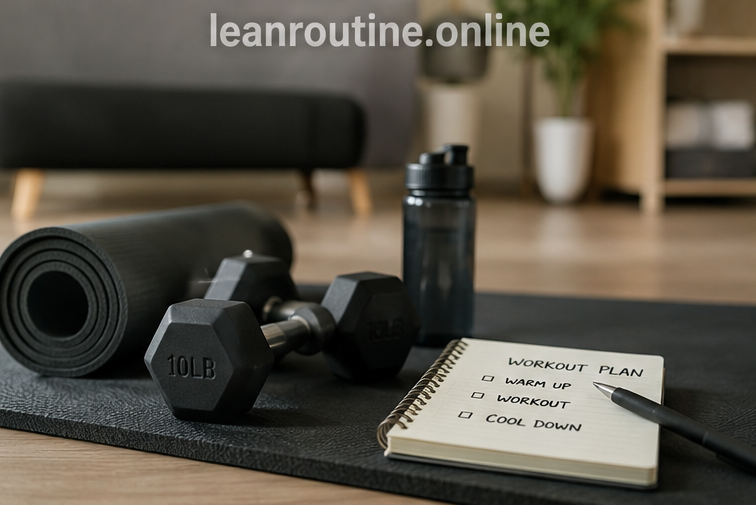
Most workout failures do not come from big obstacles.
They come from small annoying ones.
Shoes are missing. Yoga mat is under the bed. Water bottle is empty. Workout app needs login. Music playlist is not ready.
Each one feels minor.
Together, they create resistance.
When trying to start home workout routine, reduce preparation steps.
Simple examples:
- Keep workout clothes visible
- Store resistance bands in one fixed spot
- Save one default workout video
- Use one corner of the room as a workout space
The environment shapes behavior more than motivation speeches.
Another hidden issue is unrealistic home expectations.
Some people wait for quiet rooms, clean floors, and uninterrupted time.
That rarely happens.
A slightly messy room is still usable.
A 12-minute session while laundry runs still counts.
Fitness routines often become stable when people stop chasing ideal conditions.
Measure Progress Beyond Weight or Appearance
A lot of people quit because visible results take time.
After ten days, they check the mirror. Nothing dramatic changes. Motivation drops.
That is normal.
Early progress often appears elsewhere.
Look for smaller signs:
- Climbing stairs feels easier
- Less stiffness in the morning
- Better posture during work
- Slightly better sleep
- Short workouts feel less exhausting
These changes are easy to ignore because they are subtle.
But they usually appear before major body changes.
One underrated mistake is making workouts harder too early.
If you increase reps, intensity, and frequency together, recovery suffers.
That can create soreness that makes busy days feel worse.
Progress should feel sustainable.
Sometimes the best sign that your routine works is boring consistency.
You no longer debate whether to exercise. It simply becomes part of the day.
That is usually when fitness finally starts feeling real.
Build a Routine That Can Survive Busy Seasons
Life will interrupt your plan.
Travel happens. Deadlines pile up. Family issues show up without warning.
The people who stay active are not the ones with perfect discipline.
They are the ones who adapt quickly.
If one week gets chaotic, shrink the routine instead of abandoning it.
Two short sessions are better than restarting from zero next month.
That flexibility matters more than strict streaks.
To truly start home workout routine, think less like a challenge and more like maintenance.
Some weeks you push harder.
Some weeks you just protect the habit.
That balance is what keeps routines alive long after the first burst of motivation fades.
A home workout plan does not need to be impressive.
It needs to be repeatable when life is busy, energy is low, and your schedule refuses to cooperate. That is when real fitness habits are built.