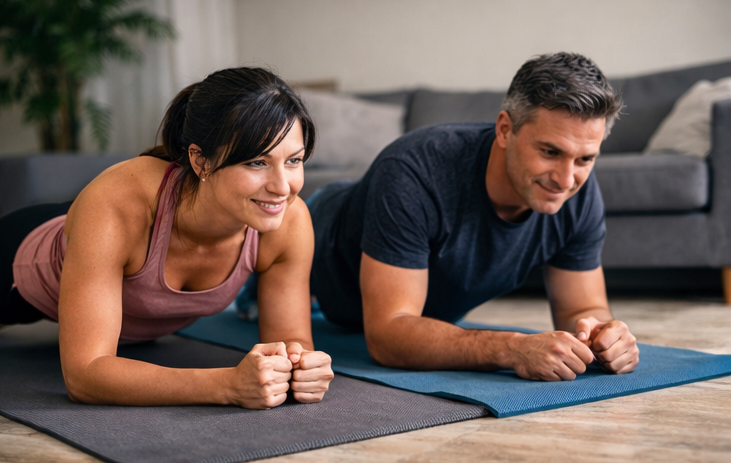
leanroutine.online – A practical beginner bodyweight workout plan designed for busy adults at home, helping you build strength and consistency without equipment.
You get home late, still in work mode, and the idea of working out feels unrealistic. There’s no time to commute to a gym, no energy to figure out complicated routines, and no space for bulky equipment. This is exactly where a well-structured beginner bodyweight workout becomes not just helpful, but necessary.
The key isn’t doing more. It’s doing something that fits into your real life and actually sticks.
Why a Beginner Bodyweight Workout Works for Busy Adults

Most people assume they need a full gym setup to see progress. That belief often leads to doing nothing at all. A beginner bodyweight workout removes that friction completely.
You’re working with movements your body already understands. Squats, push-ups, and planks don’t require learning complex techniques or adjusting machines. That simplicity lowers the barrier to starting, which is often the hardest part.
There’s also a hidden advantage. Bodyweight training forces you to control your own movement patterns. This improves coordination, balance, and joint stability. For someone who spends hours sitting or working at a desk, that matters more than lifting heavy weights early on.
The limitation, however, is progression. Many beginners repeat the same easy routine for months without increasing intensity. That’s when results plateau. A proper plan avoids this by adjusting volume, tempo, or variation over time.
If your goal includes fat loss, this type of training pairs naturally with a practical home workout approach for losing weight effectively that doesn’t rely on unrealistic schedules.
Structuring a Realistic Weekly Plan
The biggest mistake beginners make is overcommitting. Starting with five or six workout days often leads to burnout within two weeks.
A more sustainable structure is three to four sessions per week. Each session should last between 20 to 30 minutes. That’s enough to stimulate progress without overwhelming your schedule.
A simple weekly layout could look like this:
Monday: Full-body workout
Wednesday: Full-body workout
Friday: Full-body workout
This spacing allows recovery while keeping consistency.
Each session should follow a predictable flow. Start with a short warm-up, move into 4–5 core exercises, and finish with a brief cooldown. Keeping the structure consistent reduces decision fatigue. You don’t waste time figuring out what to do next.
The challenge here isn’t physical. It’s mental. Busy adults often skip workouts not because they’re too hard, but because they require too much thinking. A fixed structure solves that problem.
If you prefer a more structured routine, you can adapt ideas from a balanced full-body plan for busy schedules that aligns with this approach.
The Core Exercises You Actually Need
A beginner bodyweight workout doesn’t need dozens of exercises. In fact, fewer movements done consistently will produce better results.
Focus on these five:
Squats
They train your legs and glutes while improving mobility. Most beginners rush through them or don’t go deep enough. That reduces effectiveness.
Push-ups
A foundational upper body movement. If standard push-ups feel too hard, incline push-ups against a wall or table are a better starting point.
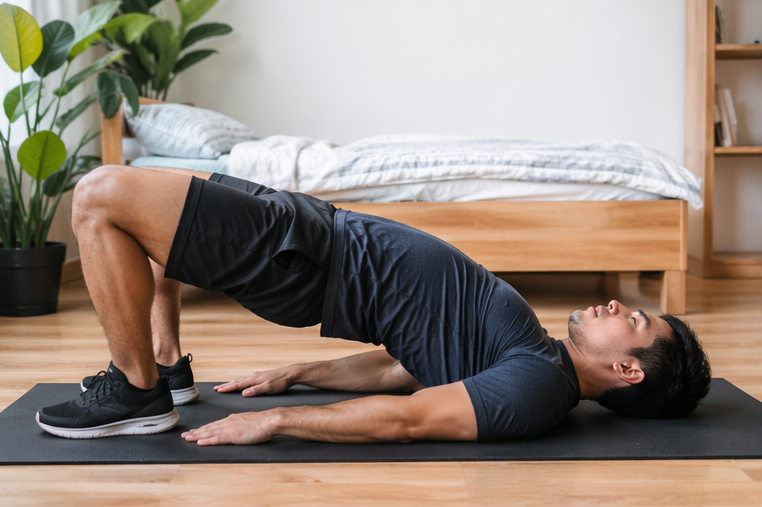
Glute bridges
These are often underestimated. They help activate muscles that become weak from prolonged sitting.
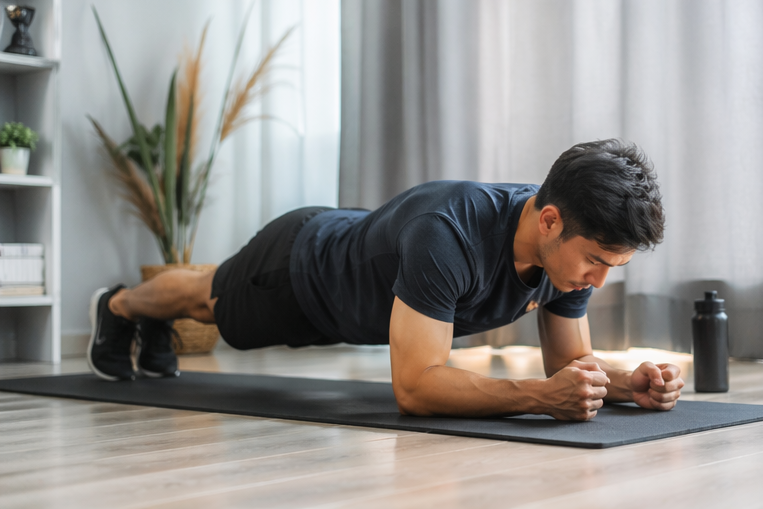
Plank holds
Core stability is essential, especially if you experience lower back discomfort from daily activities.
Reverse lunges
They improve balance and strengthen each leg individually. This reduces muscle imbalances over time.
The common mistake is trying to feel the burn instead of focusing on control. Fast, sloppy reps don’t build strength efficiently. Slower, controlled movement is more effective, even if it feels less intense.
Another misconception is that more exercises equal better results. In reality, repeating the same key movements allows your body to adapt and improve.
How to Progress Without Equipment
One of the biggest concerns with bodyweight training is progression. Without adding weights, it can feel like you’re stuck.
Progress doesn’t only come from adding resistance. It can come from increasing difficulty in several ways.
You can add more repetitions. For example, moving from 8 reps to 12 reps over time. You can also increase the number of sets. This raises total workload without changing the exercises.
Tempo is another powerful tool. Slowing down the movement, especially during the lowering phase, increases muscle tension. A squat performed slowly is significantly harder than a fast one.
Then there’s variation. Once standard push-ups become easier, you can try decline push-ups or pause at the bottom. Small changes make a big difference.
The risk here is progressing too fast. Many beginners jump to advanced variations before mastering the basics. This often leads to poor form or even injury.
A more sustainable approach is to build strength gradually. Resources like this guide on developing strength at home without equipment can help you understand how to progress safely.
Common Mistakes That Slow Down Results
Even with a good plan, certain habits can limit progress.
One common mistake is inconsistency. Skipping sessions frequently breaks momentum. The body adapts to regular stress, not occasional effort.
Another issue is doing too much too soon. Starting with high-intensity workouts can lead to soreness that discourages future sessions. Moderate intensity is more sustainable for beginners.
Form is another overlooked factor. Poor technique reduces effectiveness and increases the risk of discomfort. For example, letting your lower back sag during planks can create strain instead of strengthening your core.
There’s also the problem of unrealistic expectations. Many people expect visible changes within a couple of weeks. When that doesn’t happen, they lose motivation. In reality, noticeable improvements often take several weeks of consistent effort.
Finally, ignoring recovery can slow progress. Sleep, hydration, and basic nutrition all play a role. A good workout plan can’t compensate for poor recovery habits.
Understanding these pitfalls early helps you avoid frustration later.
Making the Routine Fit Into Your Daily Life
The most effective beginner bodyweight workout is the one you actually follow. That means it has to fit your routine, not disrupt it.
For some people, mornings work best. A short session before work removes the chance of skipping it later. For others, evenings are more realistic, especially after work responsibilities are done.
The key is to anchor the workout to an existing habit. For example, exercising right after you change out of work clothes or before dinner. This creates a natural trigger.
Time constraints are another factor. On busy days, even a 15-minute session is better than skipping entirely. Short workouts maintain consistency, which is more important than duration.
Space can also be a concern, especially in small apartments. Fortunately, bodyweight exercises require minimal room. A small area near your bed or living room is enough.
Motivation fluctuates. That’s normal. Instead of relying on it, focus on routine. When workouts become part of your schedule, they require less mental effort.
There will be days when the plan doesn’t work. That’s not failure. Adjusting and continuing is what builds long-term consistency.
Over time, this routine becomes less about working out and more about maintaining a baseline level of physical capability. That shift in mindset is what makes it sustainable.
And for busy adults, sustainability is the real goal.