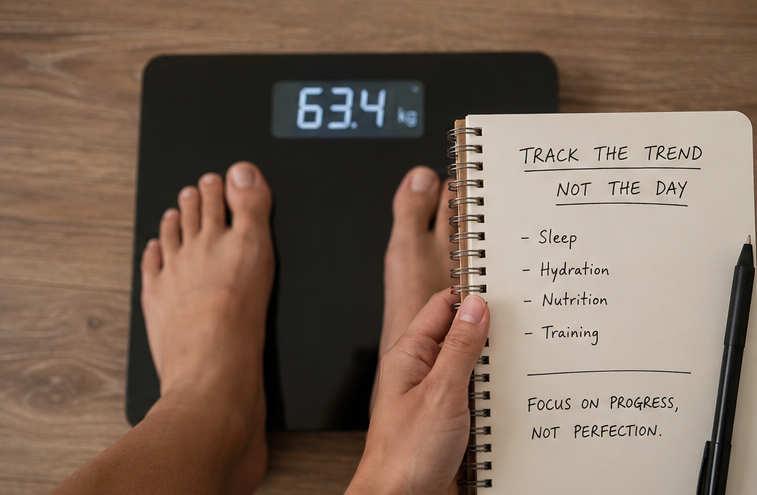
leanroutine.online – Losing inches but not weight is a common outcome of home workouts, often linked to body composition changes rather than lack of progress.
For many people starting a home workout routine, the expectation is simple: the number on the scale should go down. So when that number barely moves or doesn’t move at all while clothes start fitting better, confusion tends to follow.
This pattern, often described as losing inches but not weight, is more common than most assume. It reflects a shift in body composition rather than a lack of progress, but without context, it can easily feel like something is going wrong.
Understanding what’s actually happening beneath the surface requires looking beyond the scale and into how the body responds to training, especially in a home workout setting.
What Losing Inches but Not Weight Really Means

At its core, this situation indicates that the body is changing shape without significantly changing total mass.
Body weight is a combination of several components: fat mass, muscle mass, water, glycogen stores, and even digestive contents. When someone loses fat while simultaneously gaining muscle or retaining more water, the total number on the scale may remain stable.
What changes instead is circumference waist, hips, thighs, or arms.
This is why someone might notice:
Jeans fitting more loosely
A smaller waist measurement
Visible changes in body definition
while the scale appears stagnant.
In practical terms, inches lost reflect fat reduction or redistribution, even if weight doesn’t immediately follow.
The Role of Muscle Gain in Home Workouts

One of the most overlooked factors behind this phenomenon is muscle development, particularly for beginners.
When someone starts resistance-based home workouts bodyweight exercises, resistance bands, or light dumbbells the body responds by building muscle tissue. This adaptation happens relatively quickly for those new to training.
Muscle is denser than fat. A kilogram of muscle occupies less space than a kilogram of fat, which explains why body measurements shrink while weight stays similar.
This dynamic is explored further in the context of how muscle gain can offset visible fat loss during training, especially in early stages of a program.
In home workout environments, where structured progression might be less obvious than in a gym, these changes can feel subtle but are still significant.
Why the Scale Is a Limited Metric
The scale provides a single number. It does not distinguish between fat loss, muscle gain, or water fluctuations.
Relying exclusively on weight as a progress marker often leads to misinterpretation.
Several factors can mask fat loss on the scale:
Water Retention from Training Stress
Exercise creates microscopic damage in muscle fibers, which is part of the adaptation process. The body temporarily retains water to support repair and recovery.
This can increase or stabilize weight even when fat loss is occurring.
Glycogen Storage Changes
When physical activity increases, muscles store more glycogen for energy. Glycogen binds with water—roughly 3 grams of water per gram of glycogen.
This added water weight can offset fat loss in the short term.
Hormonal Fluctuations
Stress, sleep, and dietary changes can all influence water balance and weight retention, particularly in the early weeks of a new routine.
For a broader perspective on misleading indicators, the article on common progress signals people often misinterpret during fat loss highlights how easily the scale can distort perception.
Body Recomposition: The Underlying Process
What’s happening in this scenario is often referred to as body recomposition.
Instead of purely losing weight, the body is simultaneously:
Reducing fat mass
Increasing or preserving lean muscle
Improving overall body shape
This process is particularly common in:
Beginners to exercise
Individuals returning after a long break
People combining strength training with moderate calorie control
Home workouts, when structured properly, can support recomposition effectively—even without heavy equipment.
A practical framework for this approach can be found in a structured home workout plan designed for sustainable fat loss and muscle retention, which emphasizes consistency over intensity.
Recomposition tends to progress more slowly on the scale but often produces more noticeable visual changes.
Common Mistakes in Interpreting Progress
Misreading the situation can lead to unnecessary adjustments that disrupt progress.
Overcorrecting Calories Too Soon
Seeing no change on the scale often prompts people to cut calories more aggressively. This can reduce energy levels, impair recovery, and even slow muscle development.
In cases where inches are decreasing, the current approach is often working better than it appears.
Increasing Cardio Excessively
Another common reaction is adding large amounts of cardio to force weight loss. While cardio has benefits, excessive volume can interfere with recovery and strength progression, especially in a home workout setup.
Ignoring Measurement and Visual Data
Relying solely on weight ignores other valuable indicators:
Progress photos
Tape measurements
Strength improvements
How clothes fit
These metrics often provide a more accurate reflection of body changes than weight alone.
Why This Pattern Is More Common at Home
Home workouts create a unique environment that influences how progress unfolds.
Unlike gym-based training, home routines often emphasize:
Bodyweight resistance
Moderate intensity
Higher consistency due to convenience
This combination tends to favor gradual recomposition rather than rapid weight loss.
At the same time, beginners working out at home may unintentionally increase daily movement cleaning, walking, or general activity which contributes to fat loss without drastic calorie deficits.
Interestingly, some individuals may even see the opposite pattern at first temporary weight gain due to water retention and adaptation, a scenario explained in why body weight can increase after starting a new workout routine.
These fluctuations are part of the same underlying process: the body adapting to new physical demands.
When to Expect the Scale to Change
While inches may decrease first, the scale often follows just on a delayed timeline.
As the body adapts:
Water retention stabilizes
Muscle growth slows to a more gradual pace
Fat loss becomes more apparent in total weight
This transition can take several weeks, sometimes longer depending on:
Training consistency
Nutrition quality
Sleep and recovery
Starting body composition
For individuals with higher body fat percentages, scale changes may appear sooner. For leaner individuals, recomposition can dominate for longer periods.
Practical Ways to Track Real Progress
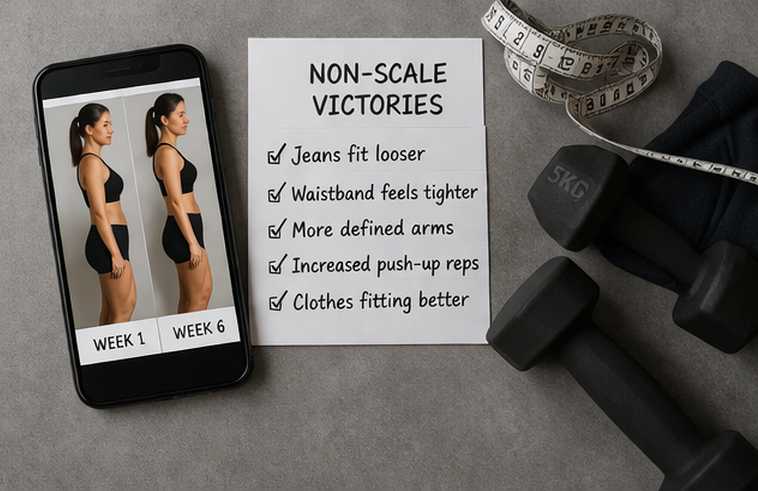
To avoid frustration, it helps to expand how progress is measured.
A more reliable approach includes:
Weekly Measurements
Tracking waist, hips, and other key areas provides objective data that reflects fat loss more directly than weight.
Progress Photos
Visual comparison over time often reveals changes that are not immediately noticeable day to day.
Strength and Performance
Improvements in push-ups, squats, or endurance indicate positive adaptation, even if weight remains stable.
Clothing Fit
One of the most practical indicators looser or better-fitting clothes often signal fat loss.
Combining these methods creates a clearer picture of progress, reducing reliance on a single metric.
A Shift in Perspective That Makes a Difference
The frustration around losing inches but not weight usually stems from expectations shaped by the scale.
But in many cases, this phase represents meaningful progress:
Fat is being reduced
Muscle is being built or preserved
The body is becoming more efficient
Rather than a plateau, it’s often a transition stage one that reflects deeper physiological changes rather than superficial metrics.
Recognizing this pattern for what it is allows for better decisions, steadier consistency, and a more accurate understanding of how home workouts reshape the body over time.