leanroutine.online – Gaining muscle at home without visible fat loss can be confusing; this article explains how gaining muscle affects body composition and scale trends.
When you start a structured home workout routine, early strength gains often feel encouraging. You can do more push-ups. Your dumbbells feel lighter. Your legs feel firmer climbing stairs. Yet weeks later, the scale hasn’t dropped—and visible fat loss seems minimal.
If you’re gaining muscle but not losing fat at home, this isn’t necessarily a setback. In many cases, it reflects how the body prioritizes adaptation. Understanding what’s happening requires looking beyond weight alone and examining how muscle growth, fat storage, and energy balance interact.
This is especially relevant for U.S. adults balancing remote work, sedentary hours, and limited equipment. The home environment changes both training stimulus and calorie dynamics in subtle ways.
Body Composition Changes Don’t Always Show Up on the Scale

The scale measures total body weight. It does not distinguish between muscle, fat, water, or glycogen.
When you begin resistance training at home—whether using dumbbells, resistance bands, or bodyweight—your body adapts quickly. Muscle tissue becomes denser. Glycogen storage increases. Water retention shifts. All of this can offset fat loss on the scale.
Muscle is more compact than fat. Five pounds of muscle occupies less physical space than five pounds of fat. That means body shape can improve even if total weight remains stable.
For beginners especially, gaining muscle while holding fat levels steady is common. This recomposition effect is most pronounced in:
Individuals new to strength training
People returning after months or years off
Those starting with moderate to higher body fat levels
The absence of weight loss does not automatically mean fat loss is not occurring. It may mean muscle gain is occurring at the same time.
Energy Balance Still Determines Fat Loss
Even if you’re gaining muscle, fat loss requires a sustained caloric deficit. That principle does not change in a home setting.
Many people assume home workouts create a significant calorie burn. In reality, most 30–45 minute resistance sessions burn fewer calories than expected—often between 150 and 350 calories depending on body size and intensity.
Meanwhile, increased hunger after training can easily compensate for that energy expenditure. In the U.S., portion sizes and calorie density of packaged foods make small overages easy to overlook. A post-workout protein smoothie, a handful of nuts, or slightly larger dinner portions can eliminate a modest deficit.
If fat loss is your priority, gaining muscle alone will not reduce fat mass without appropriate energy control. You may be at maintenance calories—supporting muscle growth while keeping fat stable.
This is why structured planning matters. Many busy professionals benefit from following a structured home fitness framework designed for working adults, where calorie awareness aligns with training goals rather than relying on exercise alone.
Progressive Overload May Be Driving Muscle Growth
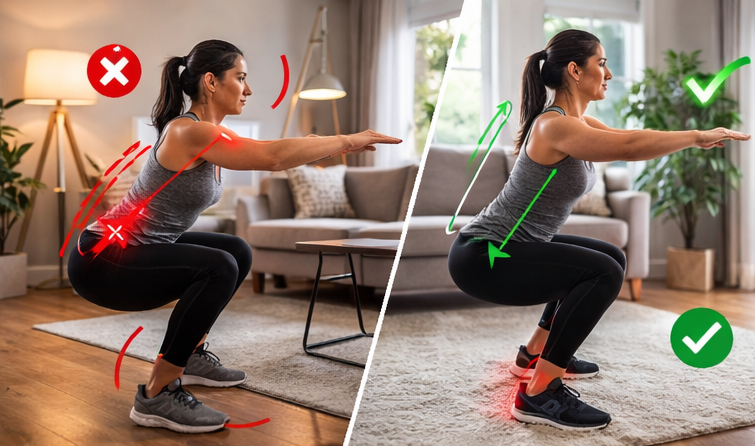
At home, results depend heavily on training quality.
If you are progressively increasing:
Repetitions
Load (heavier dumbbells or bands)
Time under tension
Weekly training volume
Then your body receives a clear hypertrophy signal. That signal encourages muscle growth.
In early phases, strength improves rapidly due to neural adaptation. Soon after, muscle fiber size begins increasing. This adds lean mass.
However, muscle growth is metabolically supported by sufficient calories and protein. If your intake is not reduced, fat loss may not occur simultaneously.
In practical terms, your body may be responding exactly as programmed: building strength and muscle in response to resistance training, without being forced to use stored fat for energy.
Water Retention and Glycogen Can Mask Fat Loss
Strength training changes how your body stores carbohydrates.
Each gram of glycogen stored in muscle binds several grams of water. As you train consistently, glycogen storage capacity increases. This can add temporary scale weight without reflecting fat gain.
Additionally, resistance training causes micro-tears in muscle fibers. The inflammatory repair process increases fluid retention during recovery. This is normal and often more noticeable in the first 4–8 weeks of consistent lifting.
If you recently intensified your routine, water shifts may be masking gradual fat reduction. Over time, these fluctuations stabilize.
This is one reason why relying solely on weekly weigh-ins can be misleading during phases of gaining muscle.
Non-Exercise Activity May Have Decreased
Another overlooked factor is daily movement outside workouts.
Non-exercise activity thermogenesis (NEAT) includes walking, standing, household chores, and general movement. When structured workouts begin, some individuals unconsciously reduce daily activity due to fatigue.
For example:
Sitting longer after workouts
Skipping evening walks
Moving less during the workday
In a remote-work environment common across the United States, small reductions in daily movement can offset the calorie burn from formal exercise.
A 40-minute home workout does not automatically compensate for eight to ten hours of sedentary time. If fat loss has stalled, evaluating step count or general activity levels may reveal the missing variable.
Protein Intake Supports Muscle, Not Automatic Fat Loss
Adequate protein intake is essential for muscle repair and growth. Many individuals aiming at gaining muscle increase protein consumption to around 0.7–1.0 grams per pound of body weight per day.
This supports:
Muscle recovery
Lean mass retention
Satiety
However, high protein intake does not override total calorie balance. Protein shakes, bars, and high-protein snacks can add meaningful calories if not accounted for.
It is possible to optimize muscle growth while maintaining body fat levels if overall intake remains at or slightly above maintenance.
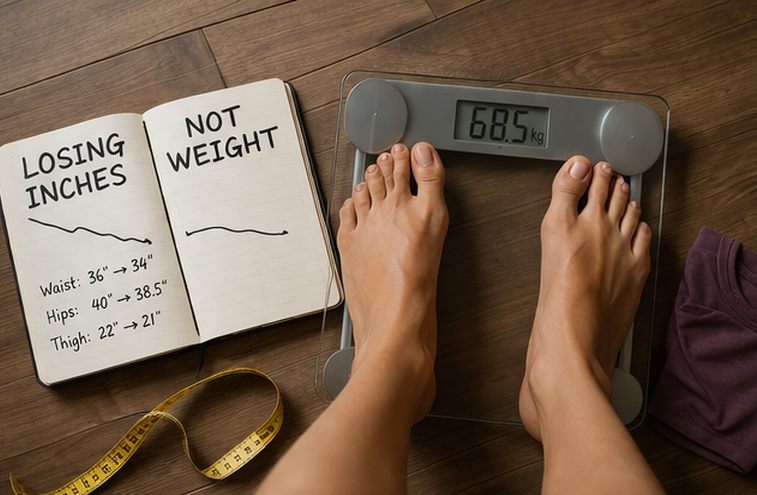
For individuals noticing tighter clothing but stable scale weight, the pattern often resembles what happens when people experience reductions in body measurements despite unchanged scale numbers, reflecting recomposition rather than stalled progress.
Fat Distribution Patterns Affect Visual Results
Even if fat loss is occurring slowly, it may not appear where you expect.
The body does not reduce fat in a targeted way. Abdominal fat, particularly in men, and hip/thigh fat in women are often the last areas to decrease.
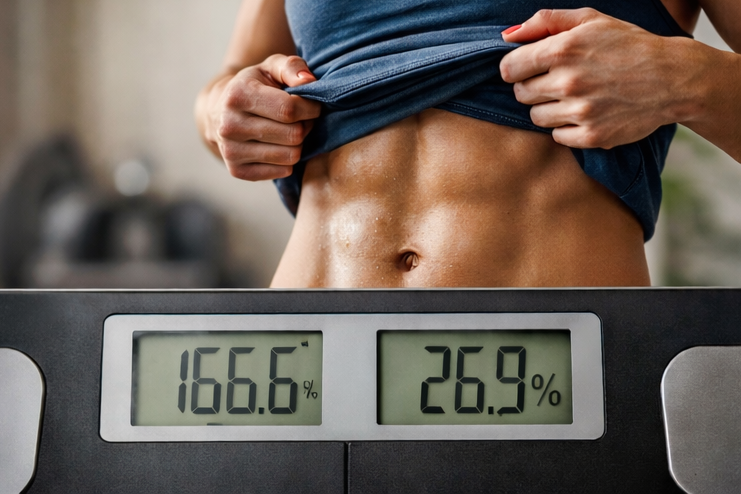
If your overall body fat percentage remains moderate, new muscle may improve firmness without creating visible definition.
This can create the perception that fat loss is not happening, when in reality it is occurring gradually across the body.
Patience becomes critical here. Body recomposition progresses more slowly than aggressive dieting but tends to preserve strength and metabolic rate more effectively.
Sleep, Stress, and Hormonal Influences
Lifestyle variables significantly influence body composition outcomes.
Chronic stress elevates cortisol, which may:
Increase appetite
Promote water retention
Encourage central fat storage
Sleep deprivation reduces insulin sensitivity and increases hunger hormones. Many U.S. adults average fewer than seven hours of sleep per night, which can slow fat reduction even with consistent exercise.
Alcohol intake also shifts metabolism temporarily away from fat oxidation. Even moderate weekly consumption adds calories that can prevent a deficit.
These factors do not negate muscle growth—but they can slow visible fat loss.
When Gaining Muscle and Losing Fat Together Is Realistic
Simultaneous muscle gain and fat loss is most realistic under certain conditions:
-
Beginner training status
-
Higher starting body fat
-
Adequate protein intake
-
Moderate calorie deficit
-
Consistent progressive overload
As training experience increases and body fat decreases, recomposition slows. At that stage, separating goals into dedicated muscle-building and fat-loss phases may be more efficient.
However, for many home exercisers, steady recomposition provides sustainable long-term improvement without severe dieting.
Deciding What Your Primary Goal Is
If your priority is visible fat reduction:
Establish a modest daily calorie deficit (300–500 calories).
Maintain strength training to preserve muscle.
Monitor daily movement levels.
If your priority is building strength and muscle:
Accept that fat loss may be slower.
Eat at maintenance or slight surplus.
Focus on progressive overload.
Trying to maximize both aggressively can create frustration because measurable changes occur gradually.
Clarity around your primary objective simplifies adjustments.
Evaluating Progress Beyond the Scale
Instead of relying exclusively on body weight, track:
Strength progression
Waist circumference
Progress photos under consistent conditions
Clothing fit
Energy levels
Over 8–12 weeks, these metrics often reveal trends that weekly weigh-ins cannot.
Gaining muscle changes metabolic capacity, improves insulin sensitivity, and supports long-term fat management. Even when visible fat loss lags behind expectations, improvements in lean mass create a stronger foundation for future phases.
Understanding how gaining muscle interacts with fat dynamics shifts the focus from short-term scale frustration to long-term body composition strate