leanroutine.online – Weight loss slows down after the first month due to metabolic and behavioral changes; learn what causes it and how to adjust effectively.
The first few weeks of a weight loss effort often feel rewarding. The scale moves quickly, clothes begin to fit differently, and motivation tends to stay high. Then, somewhere around week four or five, progress starts to slow or even stall completely.
This shift is not random. When weight loss slows down, it usually reflects predictable biological and behavioral adjustments rather than failure. Understanding what changes beneath the surface makes it easier to respond with the right strategy instead of unnecessary frustration.
The Early Drop Why the First Month Feels Faster
Initial weight loss is often driven by factors that are not entirely related to body fat reduction. A large portion comes from glycogen depletion the stored form of carbohydrates in the muscles and liver which holds water. As glycogen decreases, the body releases that water, leading to a rapid drop on the scale.
Calorie reduction also tends to be more consistent early on. Many people begin with a structured plan, heightened awareness, and fewer dietary slip-ups. Combined with the body’s initial responsiveness, this creates the impression that progress should continue at the same pace indefinitely.
That expectation becomes the problem. The early phase is not a sustainable baseline it’s a temporary acceleration.
Metabolic Adaptation The Body Adjusts Faster Than Expected

One of the primary reasons weight loss slows down is metabolic adaptation. As body weight decreases, the body requires fewer calories to function. A lighter body burns less energy both at rest and during movement.
This change is not limited to body size alone. Hormonal signals also shift. Levels of leptin which helps regulate satiety decrease, while ghrelin associated with hunger may increase. The body is essentially trying to preserve energy stores, interpreting weight loss as a potential threat.
In practical terms, this means the calorie deficit that worked in the first month becomes less effective over time.
What used to be a deficit may now be closer to maintenance.
Behavioral Drift Small Changes That Add Up

While metabolism plays a role, behavior often shifts in subtle ways that are easy to overlook.
Portion sizes may gradually increase without conscious awareness. Tracking becomes less consistent. Occasional deviations from the plan start to occur more frequently. Even small changes like an extra snack or slightly larger meals can offset a calorie deficit.
Physical activity can also decline. As routines become familiar, intensity may drop. Workouts feel easier, but not because fitness has dramatically improved often because effort has decreased.
This is where many people misinterpret the situation. They assume the body has stopped responding, when in reality the inputs have changed.
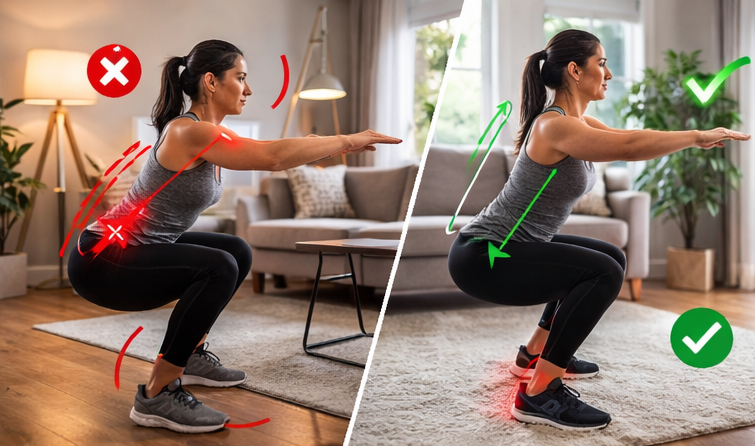
For those navigating home-based routines, having a structured framework such as a realistic home training plan designed for fat loss can help maintain consistency when motivation starts to dip.
The Plateau Phase When Weight Loss Slows Down Significantly
At a certain point, the slowdown becomes more noticeable. This is commonly referred to as a plateau, though in reality it’s often a narrowing gap between calorie intake and expenditure.
Plateaus are rarely absolute. Instead, progress becomes slower, less linear, and harder to detect week by week.
Common Misconceptions About Plateaus
Many assume a plateau means something is broken. In most cases, that isn’t accurate.
A plateau typically reflects:
A reduced calorie deficit due to metabolic changes
Less precise adherence to dietary habits
Lower training intensity or frequency
Increased efficiency in movement (burning fewer calories for the same activity)
None of these factors require extreme solutions, but they do require adjustments.
For a deeper look at practical ways to respond, this breakdown of strategies to overcome a fat loss plateau without excessive training explores approaches that prioritize sustainability over intensity spikes.
Time and Expectations: Why Progress Naturally Slows
Weight loss is not linear, and expecting it to be creates unnecessary pressure.
In the first month, losing 2–4 kilograms may feel achievable. In the following months, losing 1–2 kilograms may represent meaningful progress even if it feels slower.
This shift reflects the body’s adaptation and the diminishing returns of early changes.
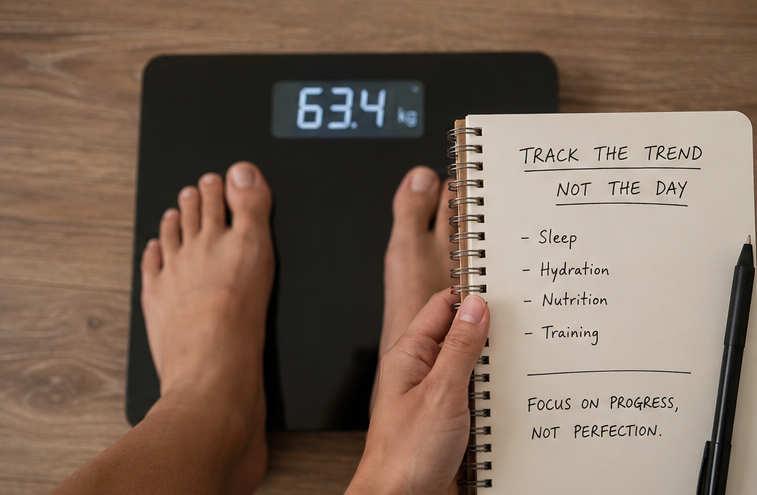
A useful way to frame this is to look at long-term patterns rather than weekly fluctuations. The rate of progress naturally declines as body composition improves.
Those who compare their progress against early results often feel stuck, even when they are still moving forward.
Looking at broader timelines, such as how home-based fitness results evolve over several weeks and months, helps recalibrate expectations and reduce unnecessary frustration.
Adjusting Strategy Without Overcorrecting

When weight loss slows down, the instinct is often to react aggressively cutting calories further, increasing workout volume dramatically, or trying entirely new methods.
This approach tends to backfire.
Instead, small, controlled adjustments are more effective and sustainable.
Refine Calorie Awareness
Rather than drastically reducing intake, it is often more useful to reassess portion sizes and tracking accuracy. Even minor miscalculations can eliminate a calorie deficit.
A short period of more precise tracking can reveal where adjustments are needed.
Increase Activity Gradually
Instead of doubling workout duration, consider incremental changes:
Adding 10–15 minutes of movement per day
Increasing workout intensity slightly
Incorporating more non-exercise activity (walking, standing, daily movement)
These changes are easier to maintain and less likely to cause burnout.
Maintain Muscle Mass
As weight decreases, preserving muscle becomes more important. Resistance training and adequate protein intake help prevent excessive muscle loss, which supports metabolic rate.
This becomes particularly relevant after the first month, when the initial rapid drop has passed.
When the Issue Isn’t the Plateau
Sometimes, what appears to be a plateau is actually a mismatch between expectations and reality.
For example, someone may still be losing weight but at a slower rate than before. If they expect the same pace as the first month, they may interpret this as failure.
In other cases, body composition is improving even if the scale remains stable. Fat loss and muscle gain can offset each other in terms of total weight, masking progress.
There are also scenarios where consistency is overestimated. Reviewing habits objectively often reveals gaps that weren’t obvious before.
For a more detailed breakdown of these situations, including why consistent effort doesn’t always translate into visible results right away, this analysis of reasons progress may stall after several weeks of home workouts offers additional context.
The Psychological Shift From Momentum to Discipline
The first month is often driven by motivation. The visible results create a feedback loop that reinforces behavior.
When weight loss slows down, that feedback weakens. Progress becomes less visible, and motivation alone is no longer enough to sustain consistency.
This is where discipline becomes more important than enthusiasm.
Building routines that don’t rely on immediate results consistent meal patterns, scheduled workouts, and realistic expectations helps maintain progress during slower phases.
It also reduces the likelihood of abandoning the process prematurely.
Recognizing What Working Actually Looks Like
A slowing rate of weight loss does not mean the process has stopped working. In many cases, it indicates that the body is adapting as expected.
Progress at this stage may look like:
Smaller weekly changes on the scale
Improved strength or endurance
More stable eating habits
Reduced variability in weight fluctuations
These outcomes are less dramatic than early results, but they are more sustainable.
Understanding this shift changes how success is measured.
Instead of focusing solely on speed, the focus moves toward consistency and long-term trajectory.
A More Sustainable Perspective
When weight loss slows down, the most effective response is rarely dramatic. It involves recognizing what has changed, adjusting inputs slightly, and continuing with a consistent approach.
The early phase of rapid progress is temporary by design. The slower phase that follows is where long-term results are actually built.
Approaching it with patience, rather than urgency, tends to produce better outcomes not just in terms of weight, but in maintaining those results over time.