leanroutine.online -Protein Shakes for Weight Loss are often seen as essential, but are they truly necessary for effective fat loss at home?
Weight loss at home often comes with a flood of recommendations, and protein shakes tend to sit near the top of that list. They’re marketed as convenient, efficient, and somehow more “effective” than regular meals. For many people trying to lose weight without a gym or structured program, the question naturally arises: are protein shakes actually necessary, or just optional?
The answer is less about the shakes themselves and more about what they represent—protein intake, calorie control, and consistency. Understanding how these factors interact in a home-based weight loss routine is far more useful than relying on a single product.
The Role of Protein in Weight Loss
Protein plays a specific and well-documented role in fat loss. It helps preserve lean muscle mass, supports satiety, and slightly increases the thermic effect of food—meaning your body uses more energy to digest it compared to fats or carbohydrates.
When someone is losing weight, especially at home without structured resistance training, there’s a risk of losing muscle along with fat. That’s where adequate protein intake becomes important. It helps maintain muscle tissue, which in turn supports metabolism.
But here’s the key distinction: protein itself matters, not the format in which it’s consumed.
Protein shakes are simply one way to meet protein requirements. They are not inherently superior to whole foods like eggs, chicken, tofu, lentils, or yogurt. The body doesn’t differentiate between protein sources in the simplified way marketing often suggests—it responds to total intake and overall dietary context.
Why Protein Shakes Became Popular

Protein shakes gained popularity largely because they solve practical problems. They are quick, portable, and require little preparation. For people juggling work, family, and limited time, that convenience can make a difference.
In a home-based routine where structure is often lacking, simplicity becomes valuable. Preparing balanced meals multiple times a day isn’t always realistic. A shake can act as a predictable, controlled option when other choices feel inconsistent.
There’s also a psychological component. Using a dedicated weight loss product can create a sense of commitment. It feels intentional, even if the underlying benefit is simply easier calorie management.
Still, convenience shouldn’t be confused with necessity.
Can You Lose Weight Without Protein Shakes
The short answer is yes—completely.
Weight loss fundamentally comes down to maintaining a calorie deficit while preserving as much muscle as possible. That can be achieved through regular meals, provided they are structured appropriately.
In fact, many people successfully follow approaches outlined in guides like a practical home-based weight loss plan, which emphasize consistency in both nutrition and movement rather than reliance on supplements.
Whole foods often provide additional benefits that shakes lack. They tend to be more filling due to fiber and volume, which helps control hunger. They also contribute a wider range of nutrients that support overall health.
However, this doesn’t mean protein shakes are useless. It simply means they are optional tools rather than requirements.
When Protein Shakes Might Be Useful
There are specific situations where protein shakes can genuinely add value—not because they are inherently better, but because they fit certain constraints.
Limited Time for Meal Preparation
For individuals with demanding schedules, preparing high-protein meals consistently can be difficult. Skipping meals or relying on low-protein snacks becomes more likely.
In this context, a protein shake can act as a fallback option. It ensures that protein intake doesn’t drop too low, which could otherwise affect satiety and muscle retention.
Difficulty Meeting Protein Targets
Some people naturally struggle to consume enough protein through food alone. This is common among those who prefer plant-based diets or have limited access to varied ingredients.
Instead of forcing large portions of food, a shake can provide a more manageable way to close the gap.
Post-Workout Convenience
After a home workout, especially one involving resistance or bodyweight exercises, protein intake helps support recovery. While a full meal works just as well, it’s not always immediately available.
In these cases, a shake can be a practical interim solution.
That said, it’s worth noting that recovery depends more on total daily protein intake than precise timing.
Common Misconceptions About Protein Shakes
Protein shakes are often surrounded by assumptions that don’t hold up under closer examination. These misconceptions can lead people to overestimate their importance.
Protein Shakes Burn Fat Faster
No food or supplement directly accelerates fat loss in a meaningful way. A protein shake doesn’t have unique fat-burning properties. Its benefit comes from supporting calorie control and muscle maintenance.
If total calorie intake remains too high, adding protein shakes won’t lead to weight loss.
You Need Protein Shakes to Build or Maintain Muscle
Muscle maintenance depends on adequate protein and stimulus (like resistance training). That protein can come entirely from whole foods.
In fact, combining structured movement with balanced nutrition—similar to approaches discussed in why relying on diet alone often falls short—is far more impactful than adding a shake without addressing the broader routine.
More Protein Always Means Better Results
There is a threshold beyond which additional protein offers diminishing returns. Consuming excessively high amounts doesn’t speed up weight loss and may simply add unnecessary calories.
For most people, a moderate and consistent intake is sufficient.
The Interaction Between Protein Intake and Home Workouts

Protein shakes are often marketed alongside fitness routines, but their effectiveness depends heavily on how they integrate with actual activity.
At home, workouts tend to vary widely—from casual movement to structured strength sessions. The intensity and consistency of these workouts influence how important protein intake becomes.
For someone engaging in regular strength-based routines, even simple ones, protein supports muscle repair and adaptation. This becomes more relevant when following structured approaches like simple exercises designed to support sustainable fat loss.
On the other hand, if physical activity is minimal, increasing protein alone won’t compensate for the lack of stimulus. The body needs a reason to preserve muscle, and that reason typically comes from resistance or load.
In practical terms, protein shakes make the most sense when they complement an existing routine rather than attempt to replace it.
Balancing Protein Shakes With Whole Foods
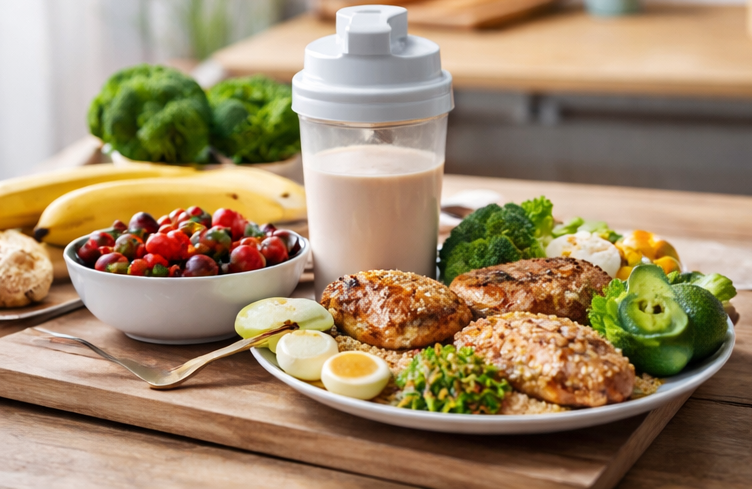
A common mistake is treating protein shakes as meal replacements across the entire day. While this can create a calorie deficit, it often leads to poor adherence over time.
Liquid calories tend to be less satisfying than solid food. Hunger can return quickly, increasing the likelihood of overeating later.
A more balanced approach is to use shakes selectively. For example:
As a supplement to a meal that lacks sufficient protein
As a backup when time is limited
As a post-workout option when a full meal isn’t immediately available
This approach maintains the benefits of convenience without sacrificing dietary quality.
It also aligns with broader strategies for sustainable weight loss, including maintaining reasonable calorie intake without extreme restriction, as discussed in approaches that avoid overly aggressive calorie cutting.
Cost, Sustainability, and Long-Term Habits
Another practical consideration is cost. Protein powders can add a recurring expense that isn’t strictly necessary.
Whole food protein sources are often more economical and provide additional nutritional value. Over time, building habits around regular meals tends to be more sustainable than relying heavily on supplements.
There’s also the question of long-term behavior. Weight loss is not just about short-term results—it’s about patterns that can be maintained. If someone becomes dependent on protein shakes to manage their diet, transitioning away from them can feel difficult.
In contrast, learning how to structure meals using everyday foods builds a more flexible and resilient approach.
So, Are Protein Shakes Necessary
Protein shakes are not required for weight loss at home. They are tools—useful in certain situations, unnecessary in others.
Their value depends on context:
They can help fill gaps in protein intake
They can simplify meal planning when time is limited
They can support recovery after workouts
But none of these benefits are exclusive to shakes.
For most people, focusing on consistent eating patterns, adequate protein from whole foods, and regular movement will produce the same results without relying on supplements.
In the end, the decision to use protein shakes comes down to practicality, not necessity.