leanroutine.online – A practical guide to lose weight at home without drastic calorie cuts, focusing on sustainable habits, movement, and metabolic balance.
Losing weight is often framed as a simple equation: eat less, move more. In practice, that equation quickly becomes uncomfortable when calorie reduction goes too far. Hunger increases, energy drops, and consistency fades. For many people trying to lose weight at home, the challenge isn’t effort—it’s sustainability.
A more effective approach focuses on subtle calorie control combined with smarter daily movement, metabolic awareness, and behavioral consistency. Instead of aggressive restriction, the goal is to create a small, manageable deficit that your body can tolerate over time.
Why Extreme Calorie Cutting Backfires at Home
When calories are reduced too sharply, the body responds in predictable ways. Hunger hormones rise, metabolic rate can slow, and daily energy expenditure often drops without you noticing. This is especially relevant in a home environment, where incidental movement—walking between places, commuting, even standing—tends to be lower.
Short-term weight loss may happen quickly, but it rarely lasts. More importantly, aggressive restriction often leads to rebound eating, where accumulated hunger overrides discipline.
A moderate approach avoids these cycles. By keeping calorie intake relatively stable and focusing instead on increasing energy output and improving food quality, weight loss becomes more gradual—but also more reliable.
Building a Small Deficit Without Feeling Restricted

The key to losing weight without cutting calories too much lies in creating a hidden deficit. This doesn’t come from dramatic dieting but from small, consistent adjustments.
Prioritize High-Satiety Foods
Protein, fiber, and whole foods tend to keep you fuller for longer. When meals are structured around these elements, overall calorie intake often decreases naturally without conscious restriction.
For example, replacing a refined carbohydrate-heavy breakfast with one that includes protein and fiber can reduce mid-morning snacking without any deliberate calorie counting.
There’s also a broader discussion around whether supplements or shortcuts help. Many people explore options like shakes, but the role of these tools is often misunderstood. A deeper look at how protein shakes fit into a home weight loss routine shows that they are not inherently necessary, especially when whole food intake is well structured.
Reduce Invisible Calories
Small, easily overlooked sources of calories—sugary drinks, cooking oils, frequent snacking—can significantly impact total intake. Adjusting these areas doesn’t feel like dieting, yet it meaningfully contributes to a calorie deficit.
For instance, switching from sweetened beverages to water or unsweetened alternatives can reduce hundreds of calories per day without affecting satiety.
Maintain Meal Regularity
Skipping meals to save calories often leads to overeating later. A consistent eating pattern stabilizes hunger signals and makes it easier to stay within a moderate intake range.
The Role of Movement in Home-Based Weight Loss
At home, structured exercise becomes more important because incidental movement is limited. However, the goal is not necessarily high-intensity training every day, but rather consistent, sustainable activity.
A well-designed home workout plan that fits into a busy schedule can significantly increase daily energy expenditure without requiring a gym or specialized equipment.
Focus on Frequency Over Intensity
Short, frequent sessions often outperform sporadic intense workouts. Even 20–30 minutes of daily movement can create a meaningful calorie deficit over time.
This could include bodyweight exercises, light resistance training, or low-impact cardio. The cumulative effect matters more than any single session.
Combine Structured Workouts With Daily Activity
Beyond exercise sessions, increasing general movement throughout the day plays a critical role. Simple behaviors—standing more, walking indoors, doing household tasks actively—can add up.
Many people underestimate how much these small movements contribute to overall calorie burn. In a home setting, being intentional about them becomes necessary.
For those looking for practical starting points, exploring simple routines that support consistent fat loss at home can help bridge the gap between intention and execution.
Preserving Metabolism While Losing Weight

One of the risks of aggressive dieting is metabolic adaptation. When the body perceives a prolonged calorie shortage, it becomes more efficient, reducing the rate at which calories are burned.
Maintaining a moderate calorie intake helps prevent this, but activity also plays a protective role.
Strength Training as a Foundation
Muscle tissue is metabolically active. Preserving—or even slightly increasing—muscle mass helps maintain a higher resting metabolic rate.
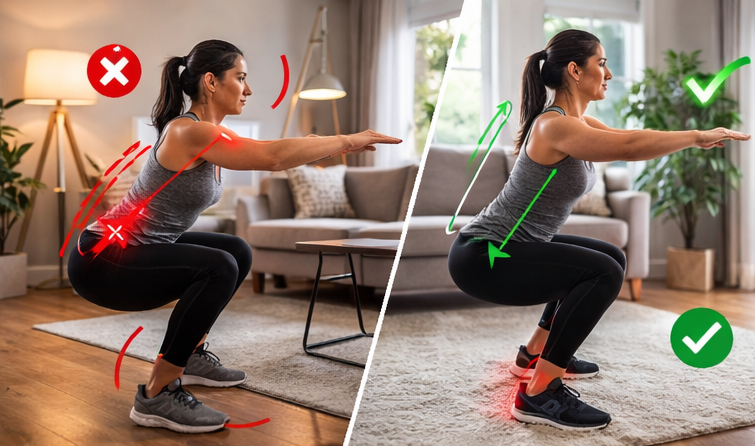
At home, this doesn’t require heavy equipment. Bodyweight exercises, resistance bands, or even controlled tempo movements can provide sufficient stimulus when done consistently.
Avoiding the Diet-Only Trap
Relying solely on food restriction often leads to muscle loss alongside fat loss. This not only affects body composition but also makes long-term weight maintenance more difficult.
The relationship between diet and movement is often misunderstood. Many assume that eating less is enough, but in practice, the absence of physical activity limits results. This is explored further in discussions about why diet alone often fails without a structured movement approach.
Managing Hunger Without Increasing Calories

One of the main concerns when avoiding calorie cuts is whether weight loss can still happen without constant hunger. In reality, hunger management is less about quantity and more about food composition and timing.
Protein Distribution Across Meals
Instead of consuming most protein in a single meal, distributing it evenly throughout the day helps maintain satiety. This reduces the likelihood of overeating later.
Volume Eating Strategies
Foods with high volume but low calorie density—such as vegetables, fruits, and broth-based meals—allow for larger portions without significantly increasing calorie intake.
This approach is particularly useful for those who prefer feeling physically full rather than simply not hungry.
Sleep and Stress Factors
Hunger is not purely physiological. Poor sleep and high stress levels can increase cravings and reduce impulse control, making moderate calorie intake harder to maintain.
Improving sleep quality and managing stress often has a direct impact on eating behavior, even without conscious dietary changes.
Common Misconceptions About Losing Weight at Home
Several misconceptions can make the process more difficult than it needs to be.
You Must Eat Much Less to See Results
In reality, small deficits sustained over time are more effective than large deficits that cannot be maintained. Weight loss is a cumulative process, not an immediate one.
Exercise Needs to Be Intense to Work
Consistency matters more than intensity. Moderate, repeatable routines are more valuable than occasional extreme efforts that lead to burnout.
Home Environments Limit Results
While gyms provide structure, home environments offer flexibility. With the right approach, results are not inherently limited—they simply depend on how routines are structured.
Creating a Sustainable System at Home
The most effective approach to lose weight at home without drastic calorie reduction is to build a system rather than rely on short-term motivation.
This system includes:
meals that naturally regulate appetite
movement that fits into daily life
habits that reduce decision fatigue
Over time, these elements work together to create a steady calorie deficit without the psychological strain of strict dieting.
What makes this approach effective is not any single tactic, but the way small adjustments compound. Instead of forcing rapid change, it aligns with how the body and behavior actually operate in a home setting.
Weight loss, in this context, becomes less about restriction and more about structure.