leanroutine.online – Many people trying to lose stubborn belly fat face a frustrating dilemma: the very exercises often recommended for fat loss—jump squats, burpees, high-intensity cardio—can aggravate knee pain or strain the lower back. Over time, discomfort turns into avoidance, and avoidance turns into stagnation.
The good news is that you can lose stubborn belly fat at home without putting unnecessary stress on your joints. It requires a smarter approach—one that balances fat-burning strategy, core stability, joint-friendly movement, and recovery. Instead of punishing workouts, the focus shifts toward sustainable training and long-term consistency.
This article walks through exactly how to do that.
Why Belly Fat Feels Stubborn
Before jumping into exercises, it helps to understand why belly fat is often the last to go.
Abdominal fat tends to respond more slowly due to a combination of hormonal factors, stress levels, sleep patterns, and overall body fat percentage. You cannot spot-reduce fat from the belly alone. What you can do is:
Reduce overall body fat
Strengthen the core muscles underneath
Minimize inflammation and stress that contribute to fat storage
If you’re working out at home, the key is combining low-impact fat-burning movement with strength training that protects your knees and lower back.
For a broader structure on building an effective routine, you can explore this complete guide to a home workout for weight loss, which outlines how to design a practical weekly plan without needing a gym. What follows here is a more specific approach tailored to people dealing with joint sensitivity.
The Biggest Mistake: High Impact Too Soon
Many online workouts promote fast results through high-intensity interval training (HIIT). While HIIT can be effective, it’s not always suitable for individuals with:
Knee discomfort
Lower back tightness
Previous injuries
Weak core stabilization
Jumping movements, deep lunges with poor alignment, and rapid twisting can overload joints when foundational strength is missing.
Instead of intensity first, prioritize:
Stability
Controlled strength
Low-impact cardio
Gradual progression
This sequence helps you lose stubborn belly fat while building resilience.
Step 1: Strengthen the Core Without Straining the Lower Back
When people think of belly fat, they think of crunches. But traditional crunches can aggravate the lower back if done improperly or excessively.
A safer approach is to train core stability rather than spinal flexion.
Safer Core Exercises to Start With
Dead Bug
Lie on your back with arms and legs raised.
Extend opposite arm and leg slowly.
Keep your lower back gently pressed into the floor.
This improves core coordination and protects the lumbar spine.
Glute Bridge
Lie on your back with knees bent.
Lift hips upward while squeezing glutes.
Avoid arching the lower back.
Strong glutes reduce pressure on both knees and lower back.
Bird Dog
Start on hands and knees.
Extend opposite arm and leg.
Keep hips level and spine neutral.
This builds spinal stability without compressive stress.
These movements don’t burn many calories on their own—but they create the foundation necessary to safely increase intensity later.
Step 2: Use Low-Impact Cardio to Burn Fat
To lose stubborn belly fat, you must create a calorie deficit through movement and nutrition. Cardio helps increase energy expenditure—but it doesn’t need to involve jumping.
Joint-Friendly Cardio Options at Home
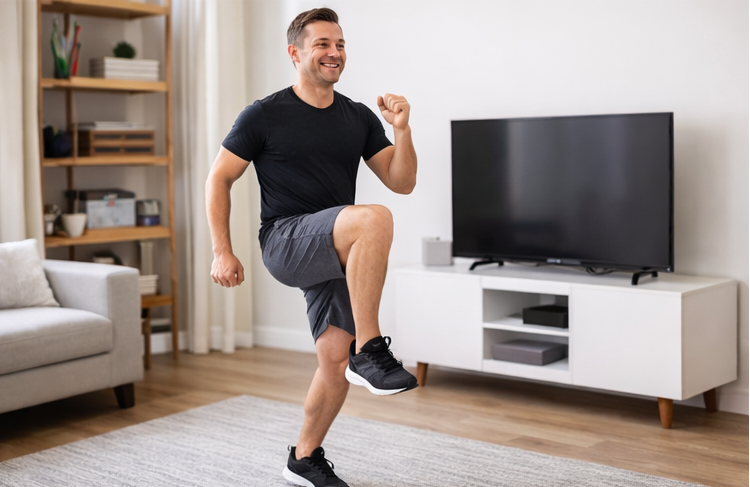
Marching in place with arm swings
Step-back lunges (shallow range)
Standing knee lifts
Slow mountain climbers (hands elevated on a chair)
Seated shadow boxing
The key is maintaining steady movement for 20–30 minutes at a moderate intensity where breathing increases but conversation is still possible.
If knees are sensitive, avoid deep forward lunges and instead use step-backs. If the lower back feels tight, reduce twisting motions and focus on upright movements.
Consistency matters more than intensity.
Step 3: Improve Hip Mobility to Reduce Knee and Back Stress
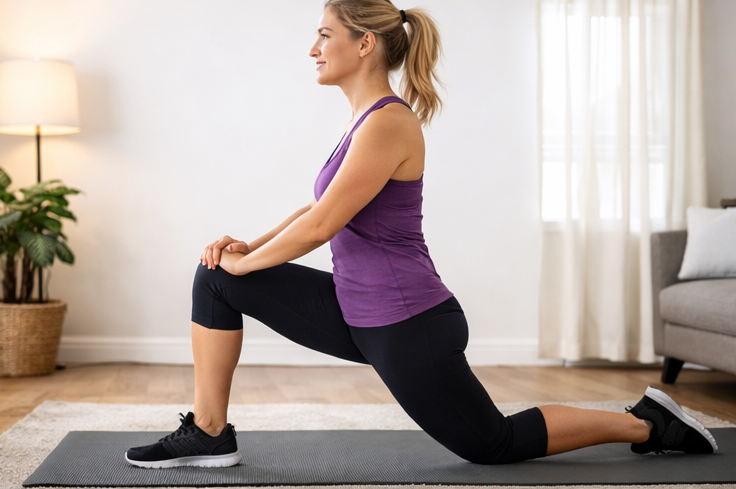
Often, knee or lower back pain during exercise isn’t caused by the knee or back itself. Tight hips and weak glutes shift load improperly.
Adding simple mobility drills can dramatically improve comfort:
Hip flexor stretch
Seated hamstring stretch
Standing calf stretch
Gentle spinal rotations
Mobility reduces compensatory patterns that can make fat-loss workouts painful.
Step 4: Train Smart Strength Circuits No Jumping Required
Strength training is essential if you want to lose stubborn belly fat efficiently. Muscle increases metabolic rate and improves insulin sensitivity.
Here’s a sample low-impact circuit:
Round (3–4 times):
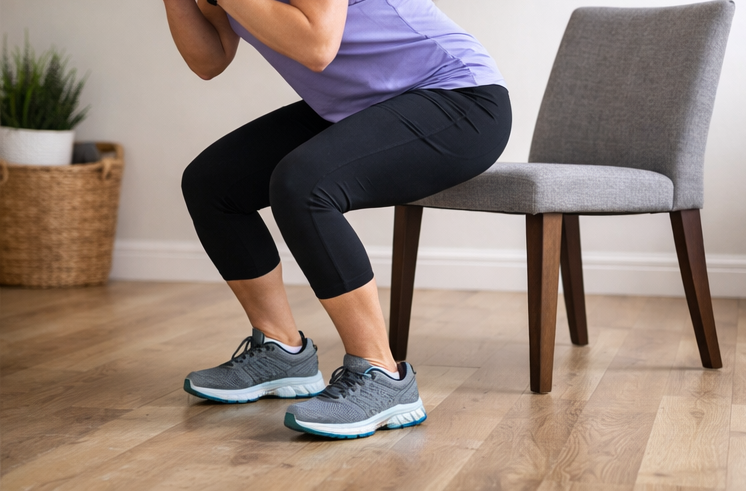
Bodyweight squats to chair (10–12 reps)
Incline push-ups (hands on table or wall)
Glute bridges (12–15 reps)
Standing marches (30 seconds)
Bird dog (10 reps each side)
Rest 60 seconds between rounds.
This approach raises heart rate without jarring joints. As strength improves, you can increase repetitions or reduce rest time.
Step 5: Protect the Knees During Lower-Body Work
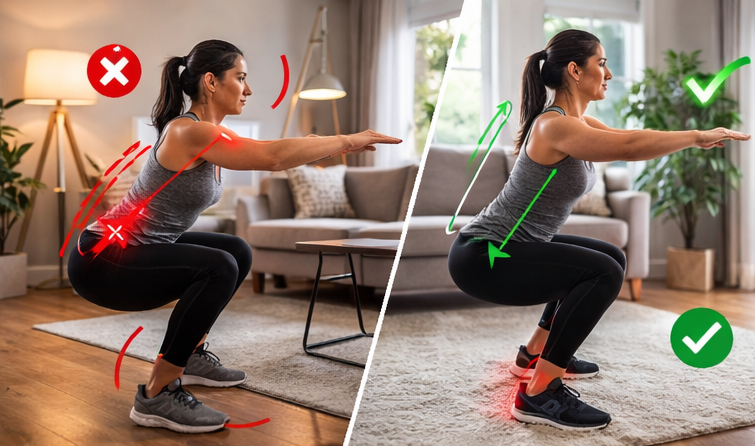
If your knees hurt during exercise, check these common issues:
Knees collapsing inward during squats
Heels lifting off the floor
Going too deep too soon
Lack of hip engagement
Practical adjustments:
Sit back into squats rather than pushing knees forward
Keep weight distributed through the entire foot
Start with chair-assisted squats
Strengthen glutes consistently
Reducing knee stress ensures you can stay consistent long enough to see belly fat reduction.
Step 6: Protect the Lower Back During Core and Cardio
Lower back pain often stems from weak deep core muscles and excessive spinal movement.
Helpful cues:
Keep ribs down during exercises
Avoid aggressive twisting
Maintain neutral spine
Engage glutes during standing movements
If planks cause discomfort, modify them by elevating hands onto a countertop or reducing hold time.
For more joint-friendly movement options, you may also explore low-impact cardio variations that maintain calorie burn without spinal stress, which can complement your main weekly plan.
Nutrition Still Matters
Even the most perfectly designed home workout cannot compensate for poor nutrition. Losing stubborn belly fat requires sustainable dietary habits such as:
Prioritizing protein at each meal
Reducing ultra-processed snacks
Managing portion sizes
Staying hydrated
Sleeping adequately
Chronic stress and sleep deprivation elevate cortisol, which is associated with increased abdominal fat storage.
Fat loss is systemic—not localized.
Weekly Structure for Safe Fat Loss
Here’s a balanced weekly template:
3 days: Strength + low-impact cardio
2 days: Light cardio or mobility
1 day: Active recovery (walking, stretching)
1 day: Rest
This approach supports fat loss while allowing joints to recover.
If pain increases, reduce volume—not frequency. Often it’s better to train 20 minutes consistently than to push one intense session that forces you to skip the next three days.
Progression Without Pain
To continue losing stubborn belly fat safely, apply gradual overload:
Add 2–3 repetitions per exercise
Extend cardio by 5 minutes
Slow down tempo for more control
Add light resistance bands
Avoid jumping straight to plyometrics if your knees or back aren’t ready. Master control first.
Pain is not a requirement for fat loss.
When to Seek Professional Input
If knee or back pain is persistent, sharp, or worsening, consider consulting a healthcare professional or physical therapist. Structural issues or movement imbalances sometimes require personalized guidance.
Training through severe pain can delay progress rather than accelerate it.
The Real Secret: Sustainability
The most overlooked factor in belly fat reduction is sustainability. You don’t lose stubborn belly fat through occasional extreme effort. You lose it through months of consistent, manageable habits.
Low-impact training may not feel dramatic—but it is effective when done consistently.
By focusing on:
Core stability
Controlled strength training
Joint-friendly cardio
Smart progression
Supportive nutrition
You create an environment where fat loss happens naturally over time—without sacrificing knee or lower back health.
Small improvements in strength, posture, and endurance accumulate. Over weeks and months, body composition changes follow.
The goal isn’t just to lose stubborn belly fat. It’s to build a body that feels strong, stable, and capable long after the fat is gone.