leanroutine.online – Starting a home workout routine after 30 often comes with a clear goal: improve fitness, lose weight, and feel stronger without spending hours at the gym. But for many beginners, progress is interrupted not by lack of motivation — but by preventable injuries caused by poor exercise form.
Minor discomfort can quickly turn into knee pain, lower back strain, or shoulder irritation. These issues rarely happen because a workout is too advanced. More often, they result from subtle form mistakes repeated consistently over time.
This article focuses specifically on home workout form mistakes that increase injury risk for beginners over 30 — why they happen, how they affect the body, and what to watch for before small errors become bigger setbacks.
Why Beginners Over 30 Are More Vulnerable to Form-Related Injuries
As we move past our twenties, recovery capacity, joint resilience, and mobility often change. This does not mean the body becomes fragile, but it does mean mechanics matter more.
Several physiological shifts contribute to increased injury sensitivity:
1. Reduced Joint Mobility
Sedentary work, long hours sitting, and limited movement patterns can reduce hip and thoracic spine mobility. When mobility decreases, the body compensates — often through the lower back, knees, or shoulders.
2. Slower Recovery
Tissues such as tendons and ligaments may take longer to adapt to new stress. Repeating poor mechanics under fatigue increases strain on these tissues.
3. Muscle Imbalances
Desk-based lifestyles commonly lead to tight hip flexors, weak glutes, rounded shoulders, and underactive core muscles. These imbalances alter exercise mechanics even in basic movements like squats or push-ups.
When beginners over 30 follow structured programs like those outlined in our home workout plan for weight loss, the exercises themselves are generally safe. The risk often comes from how those movements are performed.
Understanding form errors is therefore less about intensity and more about alignment, control, and awareness.
Common Home Workout Form Mistakes That Increase Injury Risk
Below are several form-related issues frequently seen in beginners training at home without supervision.
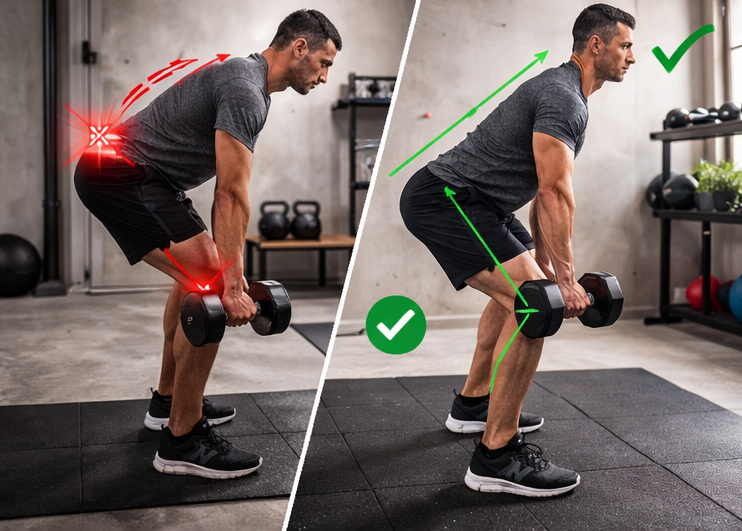
1. Rounding the Lower Back During Squats or Deadlift Variations
One of the most common home workout form mistakes is allowing the lower back to flex excessively during squats, hip hinges, or lifting household objects as resistance.
Why it happens:
Limited hip mobility
Weak glute activation
Attempting depth beyond current mobility
Potential impact:
Increased shear force on lumbar discs
Lower back strain
Lingering stiffness that limits future training
At home, without mirrors or coaching feedback, this mistake can go unnoticed. Beginners often focus on going lower rather than maintaining a neutral spine.
2. Letting Knees Collapse Inward During Squats or Lunges
When knees move inward (knee valgus), stress shifts unevenly across the joint.
Common causes:
Weak glute medius
Poor foot stability
Fatigue during higher repetitions
Potential consequences:
Knee discomfort
Irritation of surrounding ligaments
Increased risk of patellofemoral pain
This issue is especially common in beginners who increase volume too quickly.
3. Flaring Elbows During Push-Ups
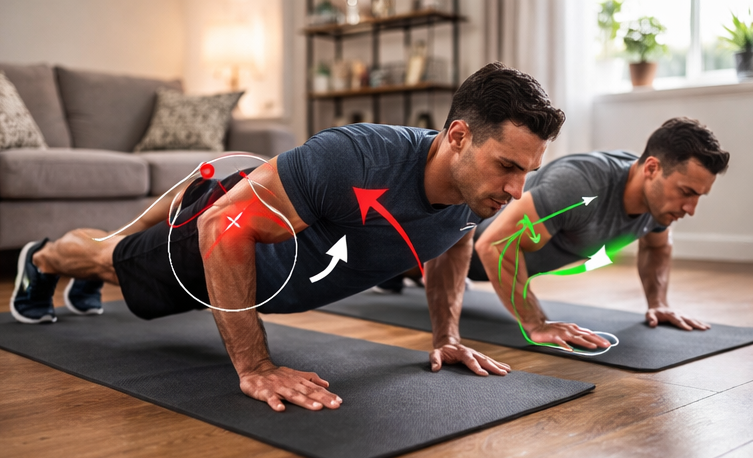
Push-ups are frequently included in weight loss routines because they require no equipment. However, beginners often let elbows flare outward at nearly 90 degrees.
Why this matters:
Places excessive stress on the shoulder joint
Reduces chest and triceps engagement efficiency
Encourages shoulder impingement over time
A narrower elbow angle (roughly 30–45 degrees from the torso) typically distributes load more safely.
4. Hyperextending the Lower Back During Core Exercises
During planks, leg raises, or mountain climbers, beginners sometimes arch the lower back unintentionally.
What happens:
Core disengages
Hip flexors dominate
Lumbar spine bears more stress
Instead of strengthening the core, the movement reinforces compensation patterns.
5. Moving Too Fast Without Control
Tempo is often overlooked. Fast repetitions may feel productive but reduce muscular control and increase joint stress.
At home, especially during follow-along videos, beginners may prioritize keeping up with the pace rather than maintaining alignment.
Why These Mistakes Happen More Often in Home Settings
Training at home offers flexibility, but it also removes certain safeguards.
Lack of External Feedback
In a gym, mirrors, trainers, or even other members can provide indirect cues. At home, feedback is limited unless someone records their form.
Space Limitations
Small rooms may restrict full range of motion. Adjusting movements to fit the space can alter mechanics.
Surface Instability
Carpeted floors, soft mats, or uneven surfaces may affect balance and foot positioning, influencing knee and hip alignment.
Over-Reliance on Online Videos
Many programs are designed for a broad audience. Without individualized modification, beginners may attempt variations that exceed their mobility or stability capacity.
For example, a structured plan like the one detailed in the pillar guide can be highly effective when applied correctly. However, the success of any home-based routine depends heavily on how accurately each movement is performed.
Practical Implications: Time, Consistency, and Financial Costs
Injury risk is not only a physical issue. It also affects consistency, time investment, and potentially financial resources.
Interrupted Progress
A mild back strain may require weeks of modified training. Beginners who experience pain early in their journey often lose momentum.
Medical or Therapy Costs
Persistent joint discomfort may require consultation with a physiotherapist or healthcare provider. While many minor strains resolve naturally, repeated strain can escalate into more complex issues.
Reduced Confidence
Pain can create hesitation. Instead of progressing gradually, individuals may avoid certain exercises entirely, limiting overall development.
For beginners over 30 balancing work and family responsibilities, setbacks are often more disruptive than the initial effort of starting.
How to Reduce the Risk of Form-Related Injuries at Home
Improving exercise form does not require advanced equipment. Small adjustments can significantly reduce strain.
1. Prioritize Alignment Over Repetitions
Quality matters more than quantity. Stopping a set when form deteriorates is more beneficial than completing additional repetitions with poor mechanics.
2. Record Short Clips of Your Movements
Using a smartphone to record squats, lunges, or push-ups can reveal alignment issues not felt during the exercise.
Key checkpoints:
Neutral spine
Knee tracking over toes
Shoulder positioning
Controlled tempo
3. Reduce Range of Motion Temporarily
If mobility is limited, partial depth with good alignment is safer than full depth with compensation.
For example:
Perform box squats to control depth
Use incline push-ups instead of floor push-ups
4. Incorporate Mobility Work
Short sessions targeting hips, thoracic spine, and shoulders can improve mechanics over time. Even 5–10 minutes of mobility before training can reduce compensatory patterns.
5. Slow Down the Tempo
A 2–3 second lowering phase encourages muscular control and improves body awareness.
Considerations Before Increasing Intensity
Many beginners equate progress with adding more repetitions or increasing difficulty. However, form consistency should precede intensity adjustments.
Before increasing workload, consider:
Can you maintain neutral spine throughout the movement
Do knees remain stable during fatigue
Is breathing controlled and coordinated
Do you feel muscular engagement rather than joint discomfort
If the answer is uncertain, refining technique may offer better long-term results than progressing prematurely.
Additionally, adequate rest between sessions allows connective tissues to adapt gradually. Training frequency without sufficient recovery may amplify the effects of small form errors.
When Discomfort Signals a Form Problem
Not all discomfort indicates injury. Muscle soreness is common when starting a new program. However, certain sensations may suggest mechanical issues:
Sharp joint pain during movement
Persistent lower back tightness after hip exercises
Shoulder pinching during pressing movements
Knee pain that worsens with repetition
In these cases, reviewing alignment and reducing load is often more productive than pushing through discomfort.
Early correction typically prevents longer interruptions.
The Long-Term Value of Technical Awareness
For beginners over 30, sustainability matters more than short-term intensity. A home workout routine should support consistent improvement without compromising joint health.
Developing technical awareness creates several long-term benefits:
Improved muscle activation
Reduced reliance on compensatory patterns
Better posture during daily activities
Greater confidence in progressing exercises
Over time, movement quality becomes more intuitive. The goal is not perfection but repeatable mechanics that distribute load efficiently across joints and muscles.
Small adjustments today can prevent larger setbacks later.
Building strength and losing weight at home is entirely achievable without expensive equipment. However, attention to home workout form mistakes is what determines whether progress remains steady or becomes interrupted by avoidable strain.
For beginners over 30, the most effective strategy is often simple: move deliberately, monitor alignment, and allow technique to guide intensity — not the other way around.