leanroutine.online – When people decide to lose weight at home, one question often surfaces quickly: should you invest in home gym equipment to speed up the process, or is bodyweight training enough
The assumption is understandable. If a treadmill, stationary bike, or adjustable dumbbells are available in professional gyms, it seems logical that owning similar equipment might accelerate results. At the same time, many successful weight loss transformations happen with nothing more than floor space and consistency.
This article focuses specifically on the role of home gym equipment in weight loss speed and efficiency. Rather than discussing home workouts in general, we will look closely at whether equipment meaningfully improves results—or whether bodyweight training can deliver comparable outcomes under the right conditions.
Why the Idea of Faster Weight Loss Often Points to Equipment
The belief that equipment equals faster progress is usually rooted in three assumptions:
More equipment means more exercise variety.
More resistance means more calories burned.
More structure leads to better consistency.
While these assumptions contain some truth, they do not automatically guarantee faster weight loss.
Weight loss fundamentally depends on creating a sustainable calorie deficit. That deficit can come from increased energy expenditure, improved metabolic efficiency, dietary changes, or a combination of these factors. Equipment can influence how you train, but it does not override these fundamentals.
For example, a treadmill may allow longer steady-state cardio sessions. Adjustable dumbbells may enable progressive overload for strength training. However, if training frequency is inconsistent or recovery is poor, equipment alone does not solve those issues.
In contrast, structured bodyweight routines—when programmed correctly—can produce high levels of muscular engagement, cardiovascular demand, and metabolic stress without any external load.
The key question is not whether equipment works, but whether it is necessary to accelerate results in a home setting.
What Home Gym Equipment Actually Changes in a Weight Loss Program
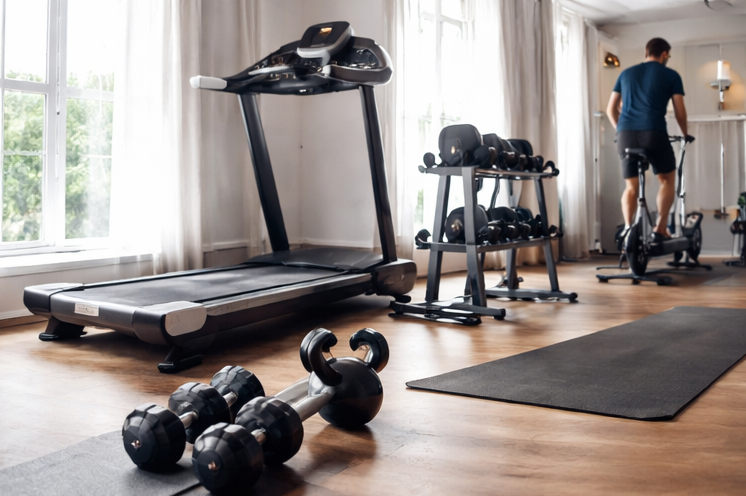
Home gym equipment influences three primary aspects of training: resistance progression, workout variety, and convenience.
Progressive Overload and Strength Development
One limitation of pure bodyweight training is that increasing resistance over time can be more complex. Movements such as push-ups, squats, and lunges can be modified, but eventually they may require advanced variations to remain challenging.
Home gym equipment—such as resistance bands, kettlebells, adjustable dumbbells, or compact weight benches—can make progressive overload more straightforward. Increasing weight incrementally can help stimulate muscle growth and strength gains.
Why does that matter for weight loss
More muscle mass can improve resting metabolic rate over time. Strength training also helps preserve lean tissue during calorie deficits, which supports long-term metabolic health.
However, for beginners and early intermediates, bodyweight progressions alone often provide enough stimulus for several months.
Cardiovascular Volume and Calorie Output
Cardio machines such as treadmills, rowing machines, or exercise bikes allow steady, measurable cardiovascular sessions. This can be useful for individuals who prefer structured, time-based workouts.
That said, bodyweight circuits, high-intensity interval training (HIIT), and compound movement sequences can generate comparable calorie expenditure when performed with intensity and proper rest intervals.
In other words, equipment can make cardio more measurable—but not necessarily more effective.
Convenience and Psychological Commitment
One overlooked factor is psychological commitment. Purchasing home gym equipment can create a sense of accountability. The visible presence of equipment in the home environment can serve as a reminder to train.
On the other hand, large equipment can become unused furniture if habits are not established first.
In the broader discussion of building an effective home fitness routine, our home workout plan for weight loss emphasizes that consistency and thoughtful planning often matter more than the equipment itself. Tools can enhance your training, but they don’t replace a clear and sustainable framework.
When Bodyweight Training Is Fully Sufficient
For many individuals—especially beginners and busy professionals—bodyweight training is not just sufficient, it is efficient.
Here are situations where equipment is not necessary to lose weight effectively:
Early-Stage Fitness Journeys
If someone is new to exercise, bodyweight movements like squats, lunges, push-ups, planks, and step-ups already provide substantial stimulus.
During the first 8–12 weeks, improvements in coordination, strength, and cardiovascular capacity happen rapidly without added resistance. Introducing equipment too early may complicate the process without delivering proportionate benefits.
Limited Time Windows
Short, focused bodyweight circuits can be completed in 20–30 minutes. They require no setup, adjustment, or storage. For professionals balancing work and family obligations, this simplicity reduces friction.
Consistency often determines weight loss speed more than workout complexity.
Small Living Spaces
Apartments or shared living environments may not accommodate larger machines. Bodyweight training requires minimal space and can be adapted to available room.
Budget Constraints
Quality home gym equipment can represent a meaningful financial investment. For those unsure about long-term commitment, starting with bodyweight routines reduces risk.
In these contexts, equipment does not meaningfully accelerate weight loss compared to structured bodyweight programs combined with proper nutrition.
Situations Where Home Gym Equipment Can Add Strategic Value
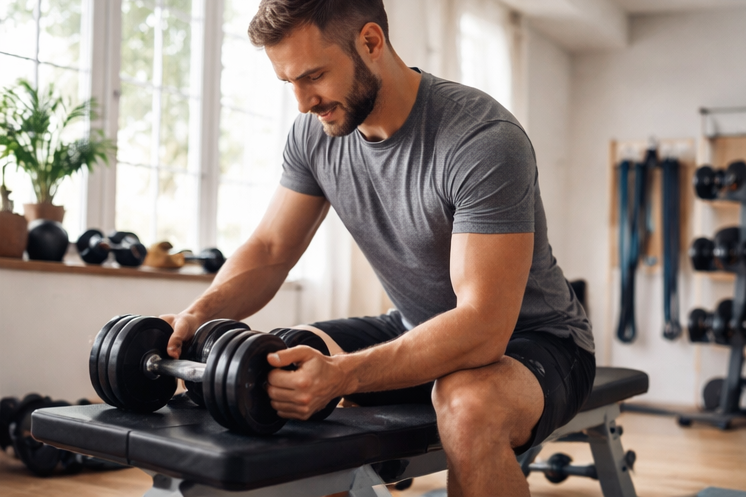
Although not essential, home gym equipment can become beneficial in certain scenarios.
Plateau After Initial Progress
After several months of bodyweight training, progress may slow. Muscles adapt to familiar stimuli. At this stage, adding external resistance can reintroduce progressive overload more efficiently.
Even minimal equipment—such as resistance bands or a pair of adjustable dumbbells—can expand exercise options and renew stimulus.
Long-Term Strength Goals
If weight loss is accompanied by a goal to significantly increase strength or muscle definition, equipment may provide better precision in resistance progression.
Advanced calisthenics can achieve similar outcomes, but it often requires technical skill and time to master.
Preference for Measurable Metrics
Some individuals are motivated by quantifiable progress. Tracking lifted weight, repetitions under load, or distance covered on a rowing machine can enhance engagement.
For those who thrive on measurable structure, equipment may indirectly improve consistency—and therefore results.
Injury Considerations
Certain injuries may limit tolerance for high-impact bodyweight movements. Equipment such as stationary bikes or cable systems can allow controlled, lower-impact exercise variations.
In this case, equipment does not accelerate weight loss directly but may enable sustainable training.
Financial and Practical Implications
Before investing in home gym equipment, it is worth considering the broader implications beyond calorie burn.
Upfront Costs vs. Utilization
Home gym equipment ranges widely in price. A set of resistance bands is relatively affordable, while smart bikes, treadmills, or multi-station machines can require substantial investment.
The real value depends on usage frequency. Equipment that is rarely used does not provide meaningful return on investment—financially or physically.
Space and Maintenance
Large equipment requires dedicated space. It may also require maintenance or occasional repairs.
Bodyweight training avoids these concerns entirely.
Time Efficiency
Setting up weights, adjusting benches, or moving equipment can add small time increments to each session. While minor, these details matter for individuals with tight schedules.
The most effective program is often the one that reduces friction.
Designing an Effective Approach Without Overcomplicating It
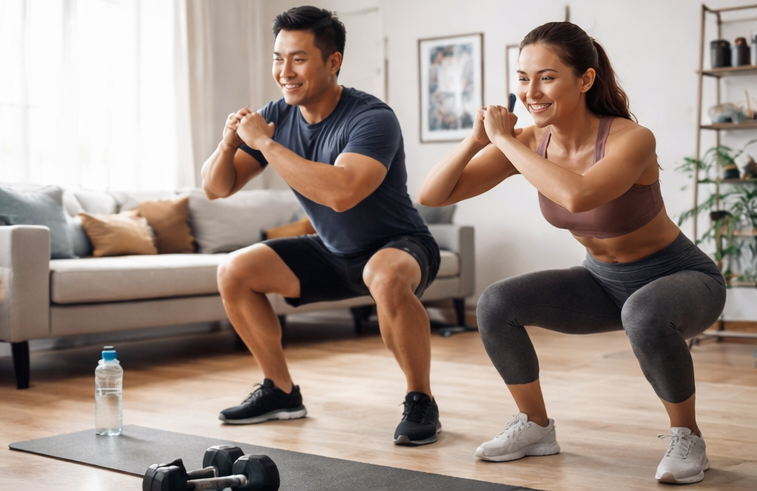
If the primary goal is weight loss, the most important elements remain:
A sustainable calorie deficit.
Progressive challenge in workouts.
Adequate recovery and sleep.
Long-term consistency.
Whether achieved through home gym equipment or bodyweight training, these fundamentals do not change.
A balanced approach many people find effective includes:
3–4 weekly strength-focused sessions (bodyweight or resistance-based).
2–3 moderate cardiovascular sessions or conditioning circuits.
Daily light movement such as walking.
Equipment can support this structure, but it is not a prerequisite.
For those unsure, a phased strategy may be practical:
Begin with structured bodyweight training for 8–12 weeks.
Assess progress and consistency.
Introduce minimal equipment only if a plateau occurs or motivation declines.
This approach limits unnecessary expense while preserving flexibility.
The Psychological Side of Doing More
It is common to equate visible effort with faster progress. Owning equipment can create a sense of doing something more serious or advanced.
However, weight loss speed is rarely determined by how complex a setup appears. It is more closely tied to adherence and recovery balance.
Bodyweight training, when programmed progressively, can be physically demanding and metabolically effective. The simplicity can actually improve sustainability.
On the other hand, if equipment genuinely increases motivation and enjoyment, that psychological benefit can translate into better adherence. In such cases, the equipment is valuable—not because it burns more calories inherently, but because it helps maintain consistency.
Looking Beyond Speed: Sustainability Matters
Focusing solely on losing weight faster can sometimes lead to overtraining or unrealistic expectations. Whether using home gym equipment or bodyweight exercises, long-term sustainability determines lasting outcomes.
Strength preservation, metabolic health, injury prevention, and habit formation all play roles in maintaining results.
For many people, the most sustainable solution is the simplest one they can repeat consistently.
Home gym equipment can be a helpful addition under the right circumstances, particularly for progression and motivation. But bodyweight training remains a fully viable, efficient, and scalable method for weight loss when structured properly.
The deciding factor is not the presence of equipment—it is how effectively the overall program supports steady progress without unnecessary complexity.