leanroutine.online – Many people reduce calories, cut sugar, and commit to strict meal plans—yet months later, the scale barely moves or the weight quickly returns. The frustration often leads to the same question: Why does diet alone fail, even when the effort feels consistent
The short answer is that fat loss is not simply about eating less. While nutrition plays a central role, relying on food restriction without a structured movement strategy often leads to metabolic slowdown, muscle loss, reduced energy, and unsustainable habits. Over time, these factors undermine progress.
This article focuses on one specific aspect of long-term fat loss: why diet alone fails without the support of a structured home workout plan, particularly for individuals managing work, family responsibilities, and limited time.
The Core Problem: Calorie Reduction Without Metabolic Support
Weight loss is commonly framed as a calorie equation—consume fewer calories than you burn. In theory, this works. In practice, the human body adapts.
When calorie intake drops significantly:
The body lowers energy expenditure to conserve resources
Hormonal shifts increase hunger signals
Lean muscle mass may decrease
Daily activity levels often decline unconsciously
These adaptive responses are part of normal human physiology. However, when dieting occurs without resistance training or consistent movement, muscle tissue is often the first casualty.
Muscle is metabolically active tissue. Losing it reduces resting energy expenditure, which means the body burns fewer calories at rest. Over time, progress slows—even if calorie intake remains restricted. This is one of the main reasons diet alone fails in the long term.
Without exercise to signal the body to preserve muscle, the weight lost may not primarily come from fat. Instead, it becomes a combination of fat, water, and muscle—creating a less favorable body composition outcome.
Why Muscle Preservation Changes Everything
Long-term fat loss is not simply about reducing total body weight. It is about maintaining or improving body composition.
When individuals include structured strength-based movement—such as bodyweight resistance training at home—the body receives a different signal:
Preserve lean tissue
Mobilize fat stores
Maintain metabolic rate
This shift has practical implications.
Metabolic Stability
Preserving muscle helps maintain resting metabolic rate. This reduces the likelihood of drastic metabolic slowdown that often accompanies prolonged dieting.
Improved Insulin Sensitivity
Resistance training enhances glucose uptake into muscle cells. This can improve blood sugar regulation, which indirectly supports fat metabolism.
Better Weight Maintenance
Individuals who maintain muscle mass during fat loss are statistically more likely to sustain their results. When dieting stops, their metabolism remains more stable, reducing rapid weight regain.
For busy professionals who cannot access gyms regularly, structured home workouts provide a realistic method of achieving this balance. A practical framework is outlined in this comprehensive guide on a home workout for weight loss designed for busy professionals without gym access or expensive equipment, which emphasizes consistency over intensity and sustainability over short-term restriction.
The key takeaway is not about intensity—it is about structured, progressive resistance.
The Hidden Cost of Relying on Diet Alone
Beyond physiological adaptation, diet-only approaches carry indirect costs that are often overlooked.
Energy and Productivity Decline
Aggressive calorie restriction can lead to:
Fatigue
Reduced concentration
Lower physical stamina
Irritability
For working adults, this impacts performance and decision-making. When energy levels drop, daily movement decreases, further lowering calorie expenditure.
Loss of Physical Strength
Without training stimulus, muscle strength gradually declines. Everyday activities may begin to feel more demanding. Over time, this reduces spontaneous physical activity—an important component of total daily energy expenditure.
Time Inefficiency
Ironically, relying solely on diet can waste time. Months of restriction may produce modest changes that could have been achieved more effectively through a balanced approach that includes structured training.
Higher Risk of Weight Regain
When dieting ends, metabolism may still be suppressed due to muscle loss. Returning to normal eating patterns can then lead to rapid fat regain—often referred to as the yo-yo cycle.
These outcomes are not a failure of discipline. They are predictable physiological responses to incomplete strategies.
Why Home Workouts Are Particularly Effective for Sustainability

The challenge for many adults is not knowing that exercise matters—it is integrating it realistically.
Home-based training offers several advantages that support long-term adherence:
Lower Barrier to Entry
No commute, no membership fees, and no reliance on equipment reduce friction. When barriers are low, consistency improves.
Flexible Scheduling
Short, structured sessions (20–30 minutes) can be placed around work hours or family routines.
Gradual Progression
Bodyweight exercises—such as squats, push-ups, lunges, and planks—allow progressive overload through tempo, repetitions, and variations.
Habit Integration
When exercise is embedded into daily routine, it becomes a stable behavioral anchor rather than a temporary intervention.
Consistency is more predictive of long-term fat loss than intensity. A moderate, repeatable plan performed regularly produces better metabolic support than occasional high-effort workouts.
The Psychological Dimension: Diet Fatigue vs. Active Progress

Another overlooked reason diet alone fails is psychological sustainability.
Strict dieting often revolves around restriction:
What to remove
What to avoid
What to eliminate
In contrast, incorporating workouts shifts focus toward capability and performance:
Improving strength
Increasing endurance
Tracking progression
This change in mindset influences motivation. Individuals who measure progress through performance markers—such as improved repetitions or strength—often maintain higher engagement levels.
Moreover, exercise stimulates endorphins and supports stress regulation. Since stress is associated with overeating behaviors in some individuals, regular physical activity can indirectly support better dietary adherence.
Fat loss then becomes a byproduct of a broader health-oriented routine, rather than the sole objective.
Practical Framework: Integrating Diet and Home Training

A balanced approach does not require extreme measures. Instead, it involves coordination between moderate calorie control and structured movement.
1. Avoid Severe Calorie Cuts
Gradual calorie reduction helps prevent drastic metabolic adaptation. The goal is sustainable energy deficit, not rapid weight loss.
2. Prioritize Protein Intake
Adequate protein supports muscle preservation during calorie restriction.
3. Include Resistance-Focused Sessions 3–4 Times Weekly
Even simple bodyweight routines can provide sufficient stimulus when performed with proper form and progression.
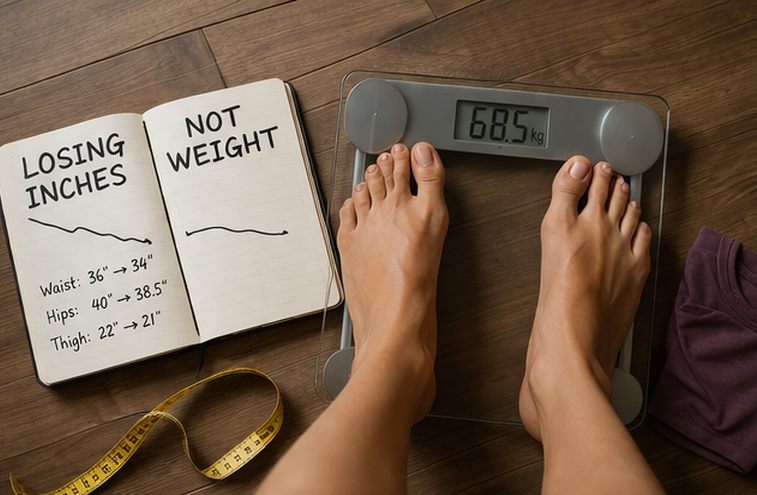
4. Track Performance, Not Just Weight
If strength improves while weight decreases slowly, the process is working.
5. Maintain Daily Movement
Walking, stretching, and general activity contribute meaningfully to total energy expenditure.
This integrated model reduces the risk of plateau, preserves muscle, and enhances long-term results.
Common Misconceptions That Reinforce Diet-Only Thinking
Understanding common misconceptions helps clarify why diet alone fails so often.
Exercise Is Only for Burning Calories
Many people view workouts as a way to earn food or offset meals. However, the primary value of resistance training lies in preserving lean mass and regulating metabolism—not immediate calorie burn.
I Don’t Have Time for Exercise
Short, structured sessions can be effective when performed consistently. The perceived time barrier often reflects lack of structure rather than lack of hours.
If the Scale Is Dropping, It’s Working
Scale weight does not distinguish between fat and muscle. Rapid decreases can mask unfavorable body composition changes.
I’ll Start Exercising After I Lose Weight
Waiting delays muscle preservation and metabolic stability. Early integration of resistance training provides compounding benefits.
Correcting these misconceptions often shifts strategy from reactive dieting to proactive body composition management.
Financial and Long-Term Health Implications
Beyond aesthetic goals, combining diet and training has broader implications.
Healthcare Costs
Maintaining muscle mass supports metabolic health, bone density, and functional independence—factors linked to long-term healthcare outcomes.
Reduced Need for Repeated Diet Programs
Yo-yo dieting often leads to repeated spending on new plans, supplements, or structured programs. A sustainable combined approach may reduce the need for frequent restarts.
Functional Longevity
Strength training supports mobility and independence as individuals age. Fat loss achieved while preserving muscle contributes to improved long-term quality of life.
These outcomes highlight that the issue is not merely about appearance—it is about resilience.
What to Consider Before Adjusting Your Approach
Before integrating home workouts into a diet-focused plan, consider:
Current fitness level
Any existing injuries or limitations
Realistic weekly time availability
Recovery capacity
Sleep quality
Starting gradually and progressing steadily is more sustainable than attempting drastic lifestyle changes.
For individuals with specific medical conditions, consultation with a qualified health professional may be appropriate before making significant changes to diet or physical activity.
The Real Reason Diet Alone Fails
Diet alone fails not because nutrition is unimportant, but because it addresses only one side of the equation. Without preserving muscle, supporting metabolism, and maintaining energy output, calorie restriction becomes progressively less effective.
Long-term fat loss requires structural support—physiological, behavioral, and psychological. A well-designed home workout plan provides that support in a practical, accessible way.
When nutrition and structured resistance training work together, progress becomes more stable, energy levels more sustainable, and outcomes more maintainable.